Quick answer: Most AC refrigerant leak repairs in Dallas-Fort Worth cost $300 to $1,600, including leak detection, the repair, and recharging the system. Small leaks at a valve or fitting sit at the low end. Leaks in a coil or line set cost more, and coil replacement can reach $1,200 to $3,000. Older R-22 systems cost the most to recharge because R-22 is no longer produced.
Key takeaways
- Refrigerant is not used up. If your AC is low, it has a leak, and recharging without fixing it means paying again next summer.
- Leak location is the biggest price driver. A valve core is a quick fix, while a corroded coil may need replacing.
- Refrigerant type matters. R-22 costs far more per pound than R-410A because new production ended in 2020.
- Check your warranty first. A coil under manufacturer warranty can cut the bill by half or more.
- On a system older than 12 to 15 years with a coil leak, replacement often makes more financial sense than repair.
- Only an EPA-certified technician may legally handle refrigerant. This is never a DIY job.
AC Refrigerant Leak Repair Cost in DFW
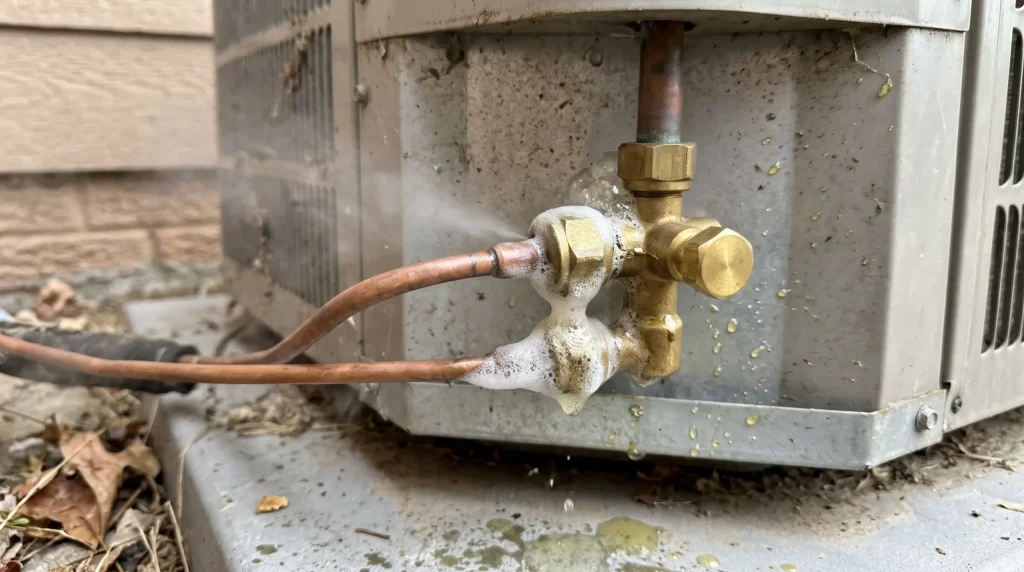
How much refrigerant leak detection, repair, and recharge cost in 2026
Most homeowners pay $300 to $1,600 in total. The table breaks that down by the part of the job and the type of leak.
|
Job |
Typical DFW cost (parts + labor) |
Notes |
|
Leak search (electronic detector, bubbles, or dye) |
$150 to $500 |
Higher for nitrogen pressure testing or hard-to-reach coils |
|
Valve core, Schrader valve, or flare fitting repair |
$200 to $600 |
Plus recharge; one of the quickest fixes |
|
Brazed joint or line set repair |
$400 to $1,200 |
Depends on access in walls or attic |
|
Recharge, R-410A system |
$200 to $600 |
Most top-ups use 2 to 5 pounds |
|
Recharge, R-22 system |
$400 to $1,200 or more |
Recycled supply only, priced per pound |
|
Line set replacement |
$800 to $2,000 |
Longer runs and finished walls cost more |
|
Evaporator coil replacement |
$1,200 to $3,000 |
Less if the coil is under warranty |
|
Condenser coil replacement |
$1,500 to $3,000 |
Often weighed against a new outdoor unit |
A typical bill combines a leak search, the repair, and a recharge. For prices on other common repairs, see How Much Does AC Repair Cost in DFW? 12 Common Repairs and What Drives the Price.
Signs Your AC Has a Refrigerant Leak
How to tell if your AC is leaking refrigerant before the bill grows
A leak usually shows up as weak cooling first, then ice, then a system that cannot keep up at all. Catching it early keeps the repair at the low end of the range.
- The house will not cool down. The AC runs all afternoon, but the AC won’t cool below the set temperature in Texas heat.
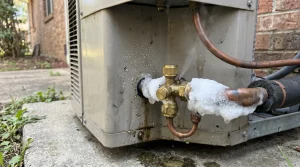
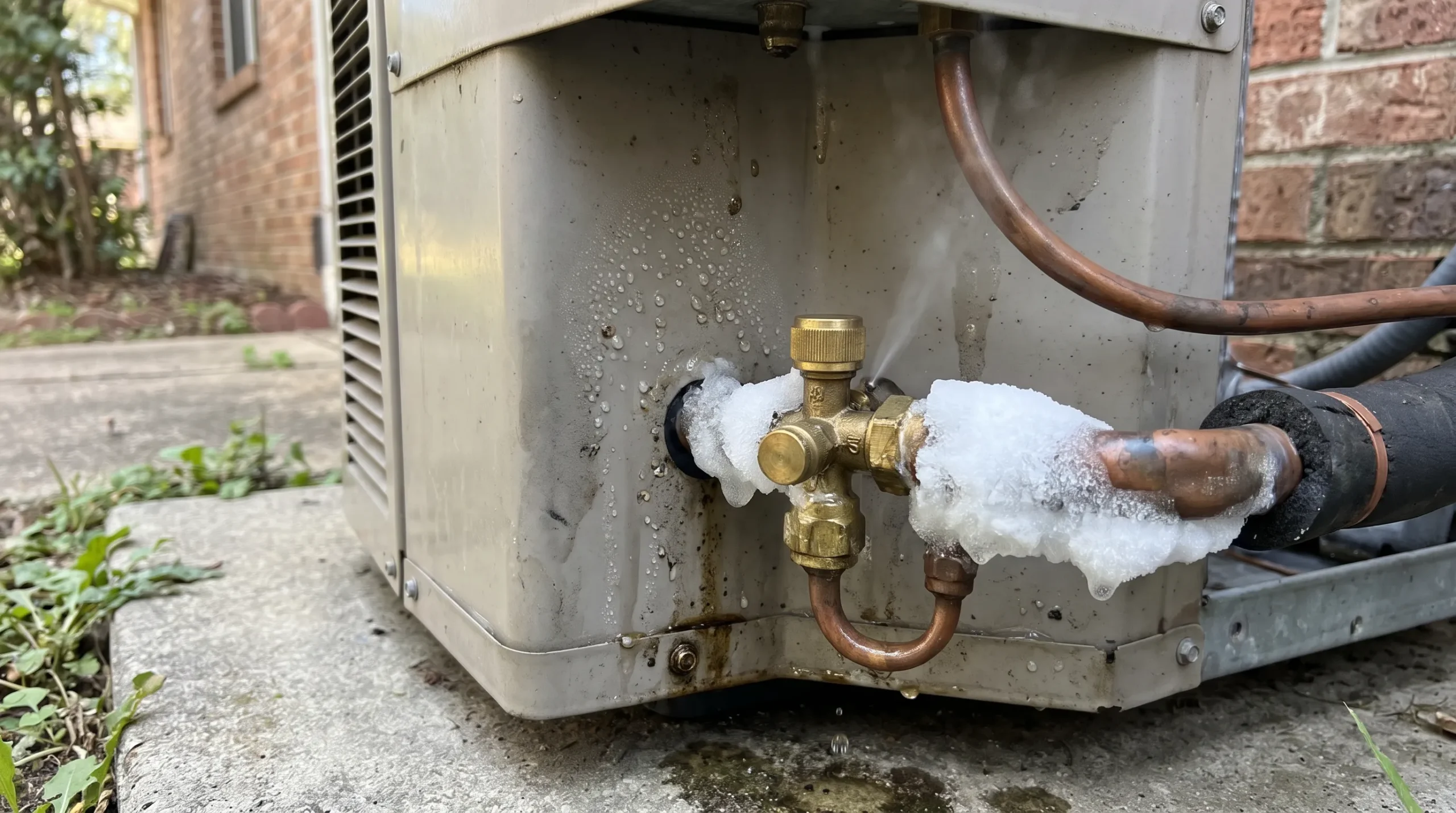
- Ice on the copper lines. A frozen AC line outside is a classic sign of low refrigerant.
- Ice on the indoor coil. Low charge drops coil temperature below freezing. Here is why an AC freezes up in summer.
- Hissing or bubbling near the indoor or outdoor unit.
- Higher electric bills with no change in your thermostat habits.
For a deeper checklist, read the signs your AC is low on refrigerant. Not every warm-air problem is a leak, though. A failed capacitor can stop the outdoor unit and look just like low refrigerant, as covered in How Much Does It Cost to Replace an AC Capacitor? 5 Signs It’s the Capacitor, Not the Compressor.
If you see ice, turn the system to fan-only or off and schedule HVAC repair. Running a frozen, undercharged system can damage the compressor.
Factor 1: Where the Leak Is
How leak location changes the cost of AC refrigerant repair
Leak location is the single biggest price driver. The same amount of lost refrigerant can mean a $250 fix or a $3,000 one.
- Valve cores and Schrader valves: The cheapest fix. A loose or worn core can be replaced in minutes, often $200 to $600 with recharge.
- Flare fittings and brazed joints: Moderate cost. Vibration and heat cycling loosen joints over time.
- Line set: Moderate to high, depending on whether the lines run through finished walls or a hot attic.
- Evaporator or condenser coil: The most expensive. Small pinhole leaks from corrosion often cannot be repaired reliably, so the coil is replaced. Read whether to replace the evaporator coil or the whole unit before you decide.
Factor 2: Which Refrigerant Your System Uses
Why R-22 refrigerant leak repairs cost more than R-410A
The refrigerant listed on your outdoor unit’s nameplate sets the price per pound.
- R-22 (systems installed before about 2010): Production and import ended in 2020. Only recycled and stockpiled supply remains, so it costs much more per pound.
- R-410A (most systems from about 2010 to 2024): Still widely available and moderately priced.
- R-454B and R-32 (most new systems since 2025): Newer, lower-impact refrigerants. Parts and refrigerant can cost more while supply ramps up, but most of these systems are still under warranty.
If you are curious how refrigerant fits into your system, our post on whether air conditioning uses gas explains the basics. Heat pumps use the same refrigerant circuit for heating, so a leak can leave you cold in January. In winter, that repair falls under heating service, at the same price.
Factor 3: How Much Refrigerant the System Needs
How AC system size affects your recharge cost
Refrigerant is priced by the pound, so a bigger system or a bigger loss means a bigger bill. A 2-ton system holds far less than a 5-ton system, and a slow leak caught early needs only a top-up after the repair.
A small leak caught early might need 2 to 3 pounds. A system that has been running nearly empty may need a full recharge after a vacuum. Rooftop units and multi-system buildings hold much more refrigerant and are priced under commercial HVAC service.
Factor 4: How Hard the Leak Is to Find
Why AC leak detection cost varies from $150 to $500
Some leaks show up in minutes with an electronic detector. Others take hours of pressure testing.
Pinhole leaks inside a coil, leaks behind drywall, and slow leaks that only open under heat are the hardest to find. Many DFW homes have the air handler in an attic, where summer temperatures make every hour of searching slower. Nitrogen pressure testing and UV dye cost more, but they find leaks that a quick sniff test misses. Our rule of thumb from the field: paying for a thorough search is cheaper than paying for two recharges.
Factor 5: Whether Your Parts Are Under Warranty
How a manufacturer warranty lowers refrigerant leak repair costs
A coil or other part under manufacturer warranty can cut a major leak repair by half or more. You still pay for labor, refrigerant, and leak detection, but not the part itself.
Many manufacturers offer 10-year parts warranties on registered equipment. Find the model and serial number on your outdoor unit and air handler before you call, and ask the technician to check coverage before quoting.
Factor 6: The Age and Condition of Your System
When an AC refrigerant leak repair is worth it on an older unit
On a system under 10 years old, a leak repair is usually worth it. On one older than 12 to 15 years, especially an R-22 system with a coil leak, the math often favors replacement.
Low refrigerant also strains the compressor. A system that ran undercharged for a summer may have compressor damage hiding behind the leak. If your technician raises that concern, read How Much Does AC Compressor Replacement Cost? 6 Questions to Ask Before You Pay for It. Our guide to repair vs. replace for your AC unit walks through the numbers.
Factor 7: Timing and Urgency
Why after-hours refrigerant leak repairs cost more
Night, weekend, and holiday calls typically add $100 to $300. Refrigerant suppliers may also be closed, which can delay the recharge until the next business day.
A leak rarely makes your home unsafe, so it can often wait for a regular appointment. Learn when an HVAC emergency can wait overnight. The exception is extreme heat with vulnerable family members at home, when same-day service is worth the premium.
Why “Just Top It Off” Costs More in the Long Run
Why recharging AC refrigerant without fixing the leak is a bad deal
A recharge without a repair is the cheapest bill today and the most expensive choice over time. The refrigerant leaks back out, often within weeks or months, and you pay again.
Three problems come with repeated top-offs:
- You keep buying refrigerant. On an R-22 system, two or three top-offs can add up to the price of a real repair.
- The system runs undercharged between visits. That raises bills and strains the compressor.
- Stop-leak sealants carry risks. Many technicians avoid them because they can clog valves and other small passages. Ask before anyone adds sealant to your system.
If a technician recommends a recharge only, ask where the leak is and why it is not being repaired.
Repair or Replace After a Refrigerant Leak?
How to decide between leak repair and a new AC system
Repair when the system is under 10 years old and the leak is at a valve, fitting, or accessible joint. Consider replacement when the system is over 12 to 15 years old, uses R-22, or has a leaking coil.
If replacement makes more sense, ask about HVAC replacement options sized to your home. Building or adding on? Proper HVAC installation, including a clean, tightly brazed line set, prevents the slow leaks that cause many future repairs. Homeowners on Oncor lines can check its energy efficiency programs for incentives on qualifying high-efficiency equipment.
Rising bills are not always refrigerant. Leaky ducts and a hot attic can make a healthy system run nonstop. An energy assessment measures how your equipment performs, and a structure energy review checks insulation and air leaks in the house itself.
How to Hire the Right Technician for a Refrigerant Leak
How to avoid overpaying for AC leak repair in Bedford and DFW
Refrigerant work is a common place for overcharging, because homeowners cannot see what was added or why. Four steps protect you.
- Verify the license. Texas AC contractors must be state-licensed. Look up any company with the Texas Department of Licensing and Regulation. Local coverage from NBC DFW has reported on unlicensed AC operators cited across the area.
- Confirm EPA certification. Federal law requires technicians who handle refrigerant to be EPA Section 608 certified.
- Get the leak location in writing. Ask where the leak is, how it will be repaired, and how many pounds of refrigerant were added.
- Report problems. If a contractor charges for refrigerant that was not added or work that was not done, you can file a complaint with the Texas Attorney General’s Consumer Protection Division.
Refrigerant Leak Repair Options at a Glance
Comparing AC leak repair options by cost, lifespan, and who should do it
|
Option |
Typical DFW cost |
Best when |
DIY-safe? |
|
Recharge only (no repair) |
$200 to $1,200 |
Never as a long-term fix; only to buy time before replacement |
No. Requires EPA certification |
|
Fix valve or fitting, then recharge |
$300 to $800 |
Leak is at an accessible valve or joint |
No |
|
Line set repair or replacement |
$400 to $2,000 |
Lines are damaged, kinked, or corroded |
No |
|
Evaporator coil replacement |
$1,200 to $3,000 |
Coil has pinhole corrosion; system under about 10 years old |
No |
|
Full system replacement |
$7,000 to $15,000 or more |
System over 12 to 15 years old, R-22, or a leaking coil plus compressor damage |
No |
What you can safely do before calling: replace a dirty air filter, switch to fan-only if you see ice, and note when the system stops keeping up. Leave the refrigerant lines and service ports alone. Store-bought recharge kits are not made for home central air systems, and adding refrigerant without proper equipment can damage your system.
Get Your Refrigerant Leak Found and Fixed
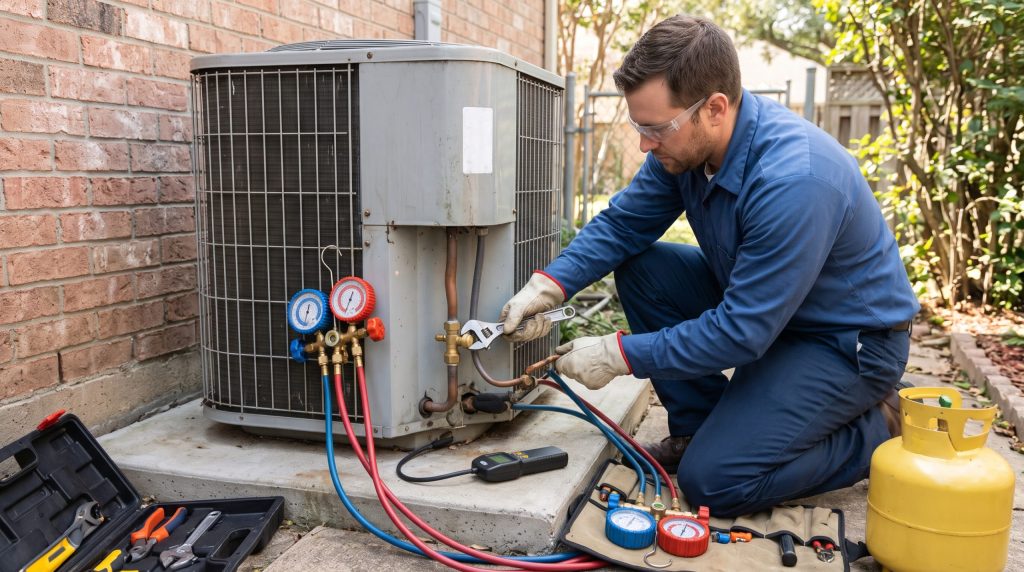
Same-day AC leak detection and repair in Bedford and DFW
Most refrigerant leak repairs in DFW cost $300 to $1,600, and the location of the leak decides where you land in that range. Finding and fixing the leak, rather than topping off, is what keeps you from paying for the same refrigerant twice.
AC Repair DFW has served Bedford, Euless, Hurst, Colleyville, Keller, and the surrounding DFW area for more than 30 years. Our licensed, EPA-certified technicians locate the leak, explain your repair options, and confirm the full price before any work begins.
Ice on the lines or a house that will not cool? Book a leak inspection or call (817) 285-8000 for same-day service.