Your AC won’t cool below a certain temperature in extreme Texas heat because it can only pull the indoor temperature down about 18 to 22 degrees below what it is outside. On a 100-degree day, that means it can hold roughly the high 70s, and on a 105-plus day it may stall in the low 80s no matter where you set the thermostat. If it’s falling short of that range, something is robbing capacity: usually a dirty filter, dirty outdoor coils, low refrigerant, leaky ducts, an aging compressor, or a system that’s simply undersized for your Bedford home. Some of these are quick fixes, while others point to a deeper problem with the original HVAC installation or a system that needs professional HVAC repair. Check the filter and outdoor unit first, then work down the list.
Key takeaways
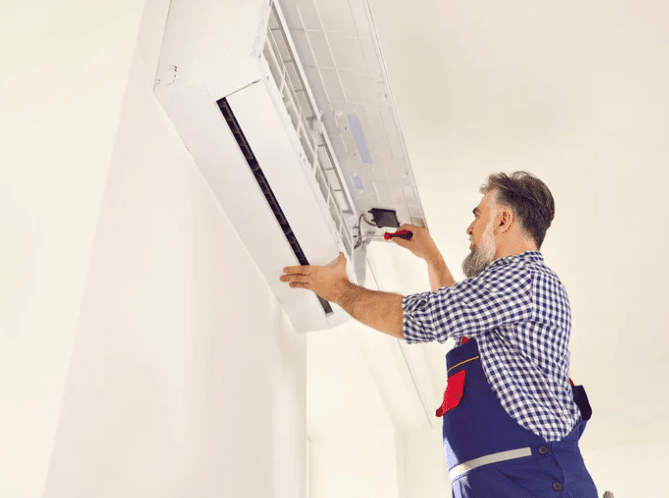
- An AC is not built to hit any number you want. It cools about 18 to 22 degrees below the outdoor temperature, so 78 inside on a 100-degree afternoon is often the realistic floor.
- If your AC used to reach your setpoint and now can’t, the most common culprits are a dirty filter or dirty condenser coils. Both are cheap DIY fixes.
- Low refrigerant always means a leak. It’s a leading reason a system runs all day but can’t close the last few degrees.
- Leaky attic ductwork is a big one in Bedford, where attics hit 130-plus and dump your cooled air before it reaches the rooms.
- If the basics are clean and it still can’t keep up, the system may be undersized or aging, which calls for a professional load calculation.
- Never touch refrigerant or the capacitor yourself. Those are call-a-pro items every time.
1. Your system is undersized or the heat simply exceeds its capacity
Symptom: The AC runs nonstop on the hottest afternoons and holds fine in the morning, but can’t close the last few degrees once it’s over 100 outside.
Most likely cause: The system is at or beyond its design capacity. Every AC is sized to cool a set number of degrees below outdoor temperature. In a brutal Texas heatwave, a unit that’s even slightly undersized for the home will run flat out and still lose ground in the afternoon.
Fix steps: First rule out the cheaper causes below (filter, coils, refrigerant), since those mimic an undersizing problem. If everything is clean and charged and it still can’t keep up every summer, have a technician run a load calculation to confirm whether the unit is the right size for your home.
Call a pro if: The system can’t reach setpoint despite being clean and properly charged, which points to a sizing or capacity problem.
Why won’t my AC reach the set temperature on the hottest days?
Capacity limits are the number one reason a healthy AC still can’t hit a low setpoint in a heatwave. For the bigger picture, see our master guide, Why Your AC Struggles in Texas Heat—and How to Fix It, and to check whether your unit is sized right, read what size AC unit you need.
2. A clogged air filter is starving the system of airflow
Symptom: Weak airflow from the vents and a slow, steady drift away from your setpoint through the afternoon.
Most likely cause: A dirty filter. It’s the single most common reason we get “it can’t keep up” calls in a Bedford summer. Restricted airflow across the coil cuts cooling output and can even freeze the coil, which makes the problem worse.
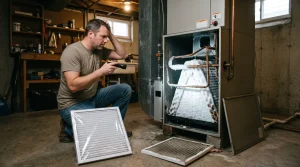
Fix steps: Turn the system off, pull the filter, and hold it to a light. If light won’t pass through, replace it. In peak summer, check monthly and change every 30 to 60 days.
Call a pro if: Airflow stays weak after a fresh filter, which suggests a duct or blower issue.
How to fix an AC that can’t keep up because of a dirty filter?
A clean filter is the cheapest fix and often the only one needed. See our guide on how to clean an HVAC filter for the details.
3. Dirty outdoor condenser coils can’t shed the heat
Symptom: The outdoor unit runs constantly, but the air coming off the top feels only lukewarm instead of hot, and cooling is worst late in the day.
Most likely cause: Dirty condenser coils. The outdoor unit’s job is to dump your home’s heat outside. When the fins clog with grass, dust, and cottonwood, that heat has nowhere to go, so the whole system loses capacity in the heat.
Fix steps: Cut power at the disconnect box. Clear debris around the unit, then gently rinse the coil fins from the inside out with a garden hose. Keep two feet of clearance on all sides.
Call a pro if: The fins are bent or the coil is greasy and needs professional cleaning.
Why is my outdoor AC unit not cooling enough in the heat
A clogged condenser is a top reason the unit runs but can’t reach setpoint. For the full breakdown, see our cluster Why Is My Outdoor AC Unit Not Cooling? 6 Signs Your Condenser Coils Are Dirty and our outdoor AC unit maintenance guide.
4. Low refrigerant from a slow leak
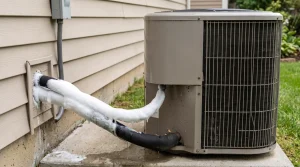
Symptom: The AC runs all day, the air is only mildly cool, and you may spot ice on the copper line at the outdoor unit.
Most likely cause: Low refrigerant. Your system doesn’t consume refrigerant, so a low charge means there’s a leak. Without enough refrigerant, the system can’t absorb heat properly and can never close the gap to your setpoint.
Fix steps: This is not a DIY fix. Refrigerant is regulated and requires EPA certification and proper gauges. Shut the system off to protect the compressor and schedule a technician to find the leak, repair it, and recharge to spec.
Call a pro if: Always, for anything refrigerant-related.
Why won’t my AC get cold when refrigerant is low
Low charge is one of the most common reasons an AC runs endlessly but stays warm. See why your air conditioner is blowing warm air to tell it apart from an airflow issue.
5. Leaky ductwork and weak attic insulation
Symptom: Some rooms never cool, the setpoint is never reached house-wide, and energy bills spike in summer.
Most likely cause: Duct leaks or thin insulation. In Bedford, ducts often run through attics that top 130 degrees. Leaky ducts pour your cooled air into that heat before it reaches the rooms, and weak insulation lets heat flood back in.
Fix steps: Seal accessible duct joints with mastic or foil tape (never cloth duct tape, which fails in heat). Weatherstrip the attic access. A full duct seal and insulation upgrade is a pro job with a strong payback in Texas.
Call a pro if: Rooms stay uneven after simple sealing, which calls for a duct pressure test.
How to fix uneven cooling from leaky ducts in a Texas attic
Duct loss is a hidden reason a whole house can’t hit its setpoint. If the freeze-and-warm cycle is also happening, see our cluster Why Is My AC Freezing Up in Summer? 7 Causes of a Frozen Evaporator Coil.
6. An aging or failing compressor is losing capacity
Symptom: An older system that used to reach setpoint now stalls a few degrees short every summer, sometimes with longer and louder run cycles.
Most likely cause: A tired compressor. The compressor is the heart of the system, and as it ages it slowly loses the ability to move refrigerant efficiently, so cooling output drops, especially under heavy heat load.
Fix steps: There’s no DIY fix. Confirm the basics are handled first. A professional energy assessment can also reveal how much capacity the aging compressor is really losing. If a technician confirms a failing compressor on an older unit, weigh the repair cost against replacement, since the compressor is the most expensive single part.
Call a pro if: The system is clean and charged but still can’t keep up, or the compressor is short cycling, humming, or tripping the breaker. At that point, full HVAC replacement is often the smarter long-term investment than repeated repairs.
How to know if a weak compressor is why your AC won’t cool
A fading compressor often means it’s time to price repair against replacement. See our honest guide on repair vs. replace for an AC unit and what a capacitor does, since a bad capacitor can mimic compressor trouble.
DIY-safe vs. call-a-pro: reaching your setpoint

| Cause | Safe to DIY | Call a pro |
| Undersized system | No, needs a load calc | Always |
| Dirty air filter | Yes, replace it | If airflow stays weak after |
| Dirty condenser coils | Yes, rinse gently | If fins are bent or greasy |
| Low refrigerant | No, never | Always, requires EPA certification |
| Leaky ductwork | Minor accessible sealing | Full duct test and seal |
| Aging compressor | No | Always |
The bottom line for Bedford homeowners
If your AC won’t cool below a certain temperature, first set realistic expectations: on a 100-degree Texas day, holding the high 70s is often the best any system can do. Then work the list. Change the filter, rinse the outdoor coil, and check for even airflow room to room. Those steps solve a large share of “it can’t keep up” problems. Anything involving refrigerant, the compressor, or the capacitor is a safety and equipment risk that belongs with a licensed tech.
If you’ve handled the basics and your home still won’t reach its setpoint, AC Repair DFW can help. Book same-day service or get a free quote and a licensed technician will pinpoint exactly why your system is falling short.
Frequently asked questions