Quick answer: Replacing an AC capacitor in Dallas-Fort Worth typically costs $150 to $400, including the part, labor, and diagnosis. The capacitor itself is inexpensive, usually $15 to $60 at a supply house. Most of what you pay covers the service visit, testing, and safe installation. Dual run capacitors and hard-start kits sit at the higher end. After-hours or weekend calls can add $100 to $300.
Key takeaways
- A failed capacitor is one of the most common and least expensive AC repairs in North Texas, especially from June through September.
- A humming outdoor unit with a fan that will not spin is the classic sign of a bad capacitor.
- A bad capacitor can look like a dead compressor. Electrical testing tells them apart in minutes, so never accept a compressor diagnosis without it.
- Capacitors hold a dangerous charge even with the power off. Replacing one is not a DIY job.
- Replacing a weak capacitor early protects the compressor, the most expensive part of your system.
AC Capacitor Replacement Cost in DFW
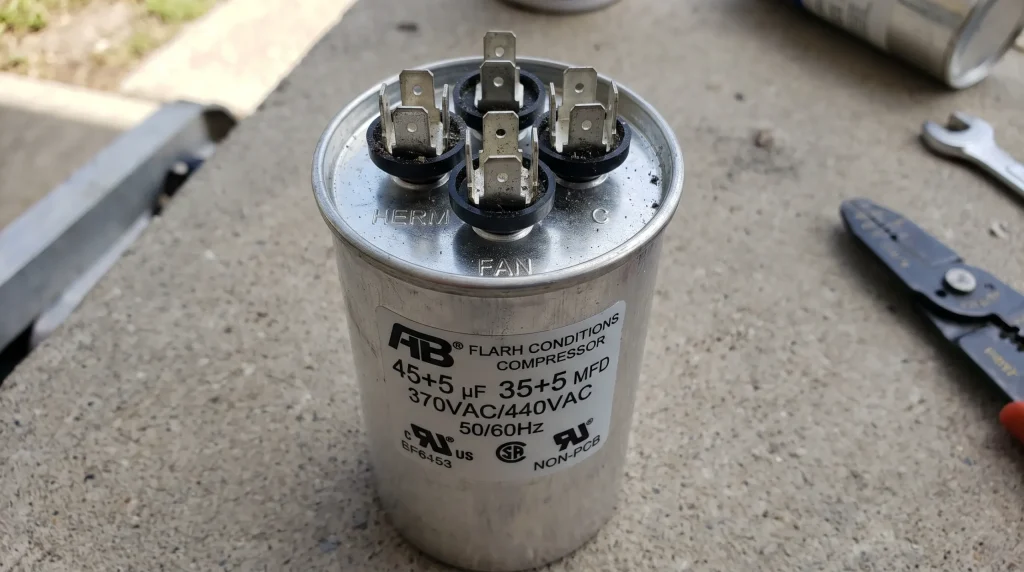
How much each type of AC capacitor costs to replace in 2026
Most homeowners pay $150 to $400. The type of capacitor and the timing of the call make the biggest difference.
|
Capacitor job |
What it does |
Typical DFW cost (parts + labor) |
|
Single run capacitor (fan or compressor) |
Keeps one motor running smoothly |
$150 to $300 |
|
Dual run capacitor |
Powers both the compressor and outdoor fan from one part |
$175 to $400 |
|
Blower motor capacitor (indoor) |
Starts and runs the indoor blower on PSC motors |
$150 to $300 |
|
Hard-start kit (added to run capacitor) |
Gives an aging compressor extra starting torque |
$200 to $450 |
|
After-hours or weekend premium |
Nights, Sundays, holidays |
Add $100 to $300 |
The part is the smallest piece of the bill. You are paying for the trip, a meter test that confirms the diagnosis, the correct microfarad (µF) and voltage match, and a safe install. A capacitor replacement is usually a single visit of under an hour.
For prices on other common repairs, from contactors to coils, see How Much Does AC Repair Cost in DFW? 12 Common Repairs and What Drives the Price.
Sign 1: The Outdoor Unit Hums but the Fan Won’t Spin
Why a humming AC with a stopped fan usually means a bad capacitor
This is the most common capacitor symptom we see. The motor is getting power, which causes the hum, but it does not get the starting boost it needs to turn.
What you notice: A steady hum or buzz from the outdoor unit, fan blades sitting still, and warm air inside. Our guide to an AC fan not working covers other causes too.
Likely cause: A weak or failed run capacitor, or the fan half of a dual run capacitor.
The fix: A technician tests the capacitor and replaces it if the reading is out of spec. Cost: $150 to $400.
Call a pro if: The unit has been humming for more than a few minutes. Turn the system off at the thermostat. A stalled motor overheats quickly, and running it this way can damage the compressor. Schedule HVAC repair before turning it back on.
Sign 2: The AC Clicks but Won’t Start, or Takes Several Tries
How a weak capacitor causes hard starts and clicking
A weak capacitor may still start the system on a cool morning but fail on a hot afternoon. That pattern is a strong clue.
What you notice: A clicking noise from the HVAC system, a delay before the outdoor unit starts, or several start attempts in a row.
Likely cause: A capacitor losing its rated microfarad value, or a failing contactor that often wears out alongside it.
The fix: Test both parts. Replace the capacitor, and the contactor if its contacts are pitted. Some older compressors also benefit from a hard-start kit.
Call a pro if: You hear repeated clicking. Each failed start puts extra strain on the compressor.
Sign 3: Warm Air From the Vents While the Indoor Fan Runs
Why your AC blows warm air when the capacitor fails
Your indoor blower and outdoor unit run on separate parts. When the outdoor capacitor fails, the blower keeps pushing air, but nothing cools it.
What you notice: The air conditioner is blowing warm air through the vents, and the outdoor unit is silent or humming.
Likely cause: A failed compressor capacitor, or the compressor side of a dual run capacitor.
The fix: Test and replace the capacitor. Check the outdoor unit while the system calls for cooling to confirm.
Call a pro if: The outdoor unit does not run at all when the thermostat is set to cool.
Sign 4: The Capacitor Is Bulging, Leaking, or Burned
What a swollen AC capacitor looks like and why it needs replacing
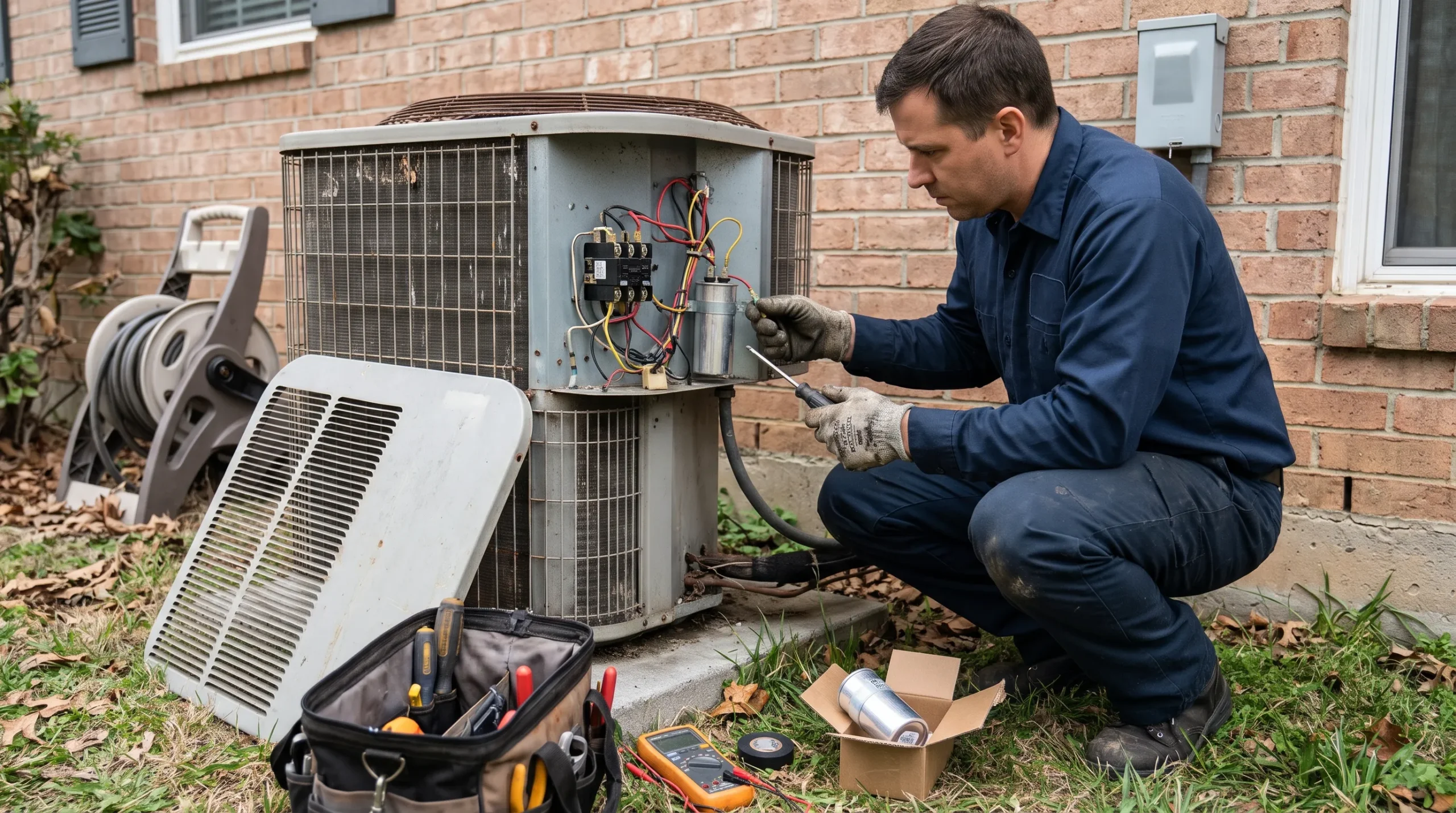
A healthy capacitor has a flat top. A domed or swollen top, oily residue, or scorch marks mean it has failed or is about to.
What you notice: Only a technician should open the panel, but this is what they look for. Learn more about what a capacitor does in your system.
Likely cause: Heat, age, and voltage spikes. Capacitors in outdoor units sitting in direct afternoon sun wear out faster.
The fix: Replace it with a capacitor of the same microfarad rating and an equal or higher voltage rating.
Call a pro if: You suspect a damaged capacitor. Do not open the electrical panel. Capacitors can hold a dangerous charge even after you turn off the power.
Sign 5: The AC Shuts Off on Hot Afternoons or Short-Cycles
Why a failing capacitor makes your AC quit in Texas heat
Capacitors weaken with heat. A part that tests marginal in April can fail outright during the first week of 100-degree afternoons.
What you notice: The system runs in the morning but shuts off by mid-afternoon, or it turns on and off every few minutes. Read more about AC short cycling and its other causes.
Likely cause: A capacitor below its rated value causes motors to overheat and trip their internal safety limits.
The fix: Test the capacitor under load and replace it if it is out of tolerance. Check the condenser coil for dirt, which adds heat stress.
Call a pro if: It happens more than once. These are among the top reasons AC units fail during heat waves in Dallas-Fort Worth, and catching it early is far cheaper than a compressor.
Capacitor or Compressor? How a Technician Tells the Difference
How to tell a bad AC capacitor from a bad compressor before you pay
A failed capacitor and a failed compressor can look identical from the yard: a humming unit and warm air. The difference in price is huge, so the diagnosis has to be confirmed with a meter, not a guess.
Here is what a proper check includes:
- Capacitor test. The technician measures the capacitor in microfarads and compares it to the rating printed on the label. Most run capacitors are rated within plus or minus 5 or 6 percent. A reading below that range means replace it.
- Compressor winding test. With power off, the technician checks resistance across the compressor terminals. Normal readings point away from a dead compressor.
- Amp draw at startup. With a good capacitor in place, the compressor should start and settle at its rated running amps. A compressor that still locks up and trips is a different, bigger problem.
- Contactor and wiring check. Burned contacts or loose wires can mimic both failures.
Our rule of thumb from the field: test the cheap parts first. A capacitor can be confirmed in minutes, and swapping it often brings a “dead” compressor right back to life. If the compressor does turn out to be the problem, review the signs your AC compressor is not working, then read How Much Does AC Compressor Replacement Cost? 6 Questions to Ask Before You Pay for It before you approve the work.
What Affects the Price of an AC Capacitor Replacement
Why AC capacitor replacement quotes range from $150 to $400
Five things move the price up or down.
- Capacitor type. A single run capacitor costs less than a dual run part. Adding a hard-start kit adds to the bill.
- Timing. A weekday call costs less than a Sunday night emergency, which can add $100 to $300.
- Equipment type. Heat pumps use the same outdoor capacitors year-round, so a failure can stop both cooling and heating. If yours fails in winter, the price is the same, but you will need heating service rather than an AC call. Rooftop and larger units for businesses fall under commercial HVAC service pricing.
- Storm damage. North Texas storms and outages often take out capacitors and boards at once. Power surges are a common cause of HVAC issues, and a whole-unit surge check adds to the visit. If your power flickered or went out first, check outage updates from Oncor, the electric delivery utility for most of DFW.
- Parts found during the visit. A pitted contactor or dirty condenser coil is often found alongside a bad capacitor. Fixing them in the same trip saves a second service call.
Regular outdoor AC unit maintenance catches weak capacitors in spring, before they fail in July.
When the Problem Is Bigger Than a Capacitor
What it means when a new capacitor does not fix your AC
If a new capacitor fails within a few weeks, something else is overheating it. Common culprits are a failing fan motor, a struggling compressor, or low refrigerant that makes the compressor work harder. A leak is a separate repair, covered in How Much Does an AC Refrigerant Leak Repair Cost? 7 Factors That Change the Price.
Age matters too. On a system older than 12 to 15 years, a string of small failures can signal it is time to price HVAC replacement. If you are adding on or building, proper HVAC installation and sizing prevent the long run times that wear capacitors out early.
Sometimes the system is fine, but the house is working against it. An oversized load from a hot attic or leaky ducts keeps the AC running for hours. An energy assessment checks how your equipment performs, and a structure energy review finds insulation gaps and air leaks in the home itself.
How to Hire the Right Technician for a Capacitor Repair
How to avoid overpaying for an AC capacitor in Bedford and DFW
A capacitor is a small, inexpensive part, which makes it a common target for upselling. Protect yourself with three steps.
- Check the license. Every AC contractor in Texas must be licensed. You can verify any company with the Texas Department of Licensing and Regulation before they arrive. NBC DFW has reported on unlicensed AC operators cited across the area.
- Ask to see the reading. A good technician shows you the meter reading next to the rating on the capacitor label.
- Be wary of a compressor diagnosis with no testing. If a contractor will not test the capacitor first, get a second opinion. You can report contractors who mislead or overcharge to the Texas Attorney General’s Consumer Protection Division.
Capacitor vs. Compressor at a Glance
Bad AC capacitor vs. bad compressor: symptoms, cost, and who should fix it
|
Bad capacitor |
Bad compressor |
|
|
Typical DFW cost |
$150 to $400 |
$1,800 to $4,000 out of warranty |
|
Outdoor unit sound |
Steady hum, fan not spinning |
Hum then trip, loud clanking, or rattling |
|
Breaker |
Usually stays on |
May trip repeatedly |
|
Visible clue |
Bulged or leaking capacitor top |
None from outside |
|
How it is confirmed |
Microfarad test in minutes |
Winding and amp tests after the capacitor checks good |
|
Repair time |
Under an hour |
Most of a day, plus parts lead time |
|
DIY-safe? |
No. Stored charge can injure you |
No. Requires EPA certification and brazing |
What you can safely do before calling: turn the system off at the thermostat if the unit is humming, replace a dirty filter, check that the breaker is on, and note any error codes or sounds. Leave the panel closed.
Get Your AC Capacitor Tested and Replaced Today

Same-day AC capacitor replacement in Bedford and DFW
A bad capacitor is one of the most common reasons an AC quits in a North Texas summer, and at $150 to $400 it is also one of the most affordable fixes. Replacing it quickly protects your compressor from the strain of failed starts.
AC Repair DFW has served Bedford, Euless, Hurst, Colleyville, Keller, and the surrounding DFW area for more than 30 years. Our licensed technicians test before they replace, show you the reading, and confirm the full price before any work begins.
Humming unit or warm air? Schedule a capacitor check or call (817) 285-8000 for same-day service.