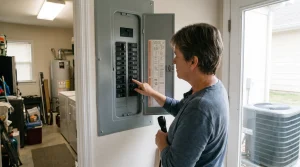
Your AC trips the circuit breaker when it draws more current than the circuit is built to carry, or when a short or ground fault sends current where it shouldn’t go. The most common causes are a weak capacitor, a dirty outdoor condenser coil, a hard-starting or shorted compressor, a failing condenser fan motor, and loose or burnt wiring. A worn-out breaker can also trip on its own. Reset the breaker once. If it trips again, leave it off and call a licensed HVAC technician, because repeated resets can damage the compressor and create a fire risk.
Key takeaways
- Reset once, then stop. A breaker that trips a second time is protecting your home from a real fault, not glitching.
- When it trips is your best clue. An instant trip on reset points to a short. A trip the moment the compressor starts points to the capacitor, contactor, or compressor. A trip after 15 to 30 minutes of running points to overheating from a dirty coil, a failing fan motor, or a refrigerant problem.
- Capacitors are one of the most common culprits in Texas heat. They’re inexpensive, but they can hold a dangerous charge even with the power off, so replacement is a job for a technician.
- Cleaning the outdoor coil is the main fix you can safely do yourself. Shut off the power at the disconnect first, and never use a pressure washer.
- Never install a bigger breaker. The breaker is sized to protect the wiring and the unit. Upsizing it trades a nuisance trip for a fire hazard.
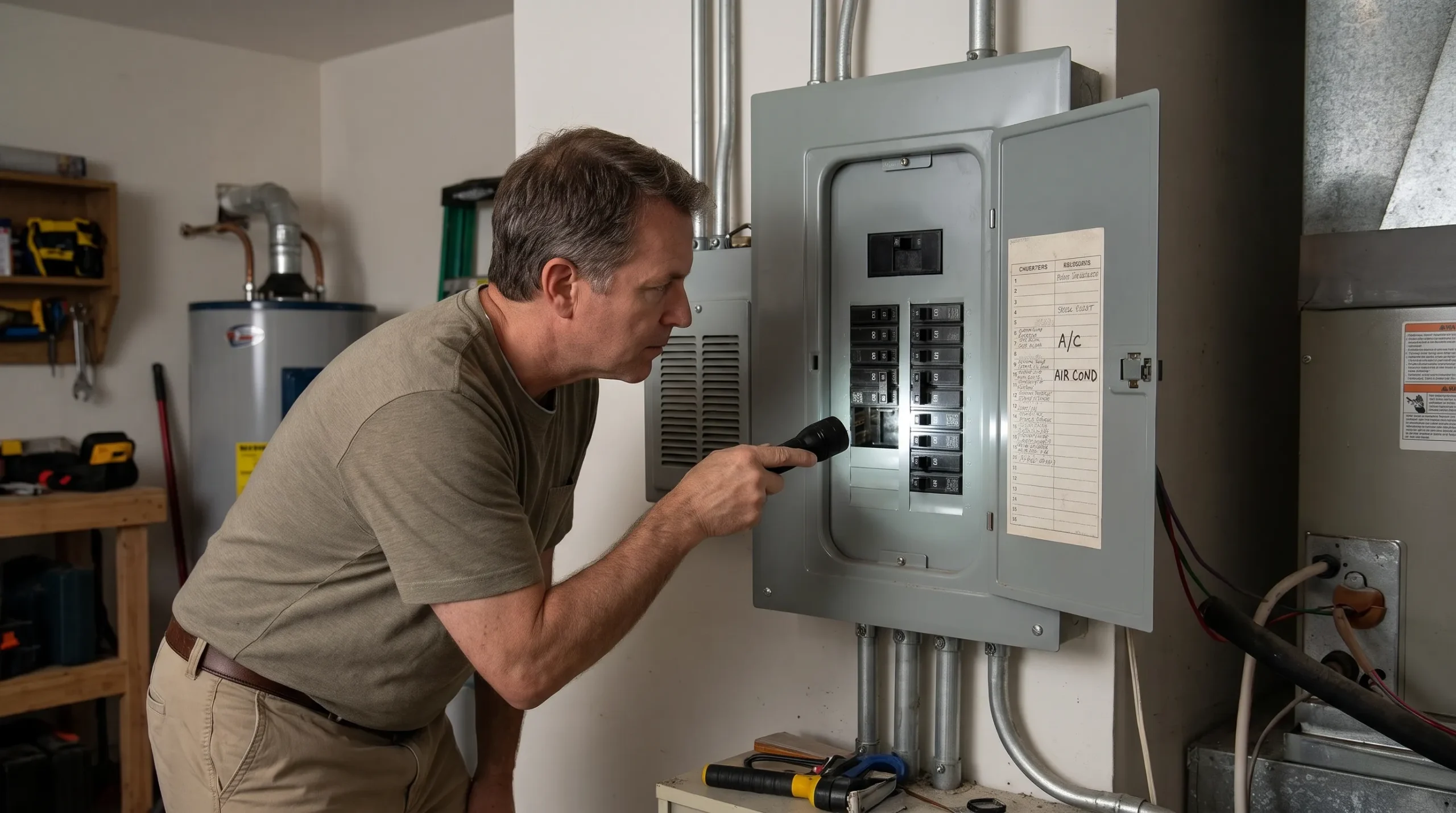
Before you work through the list, check which breaker tripped. Most central systems have two: a double-pole breaker for the outdoor unit and a separate one for the indoor air handler or furnace. The causes below focus on the outdoor unit, which is where most cooling-season trips start. They’re ordered roughly by how often they trip breakers during Bedford summers, when the same heat behind the top reasons AC units fail during DFW heatwaves pushes every weak part to its limit.
1. A Weak or Failed Capacitor
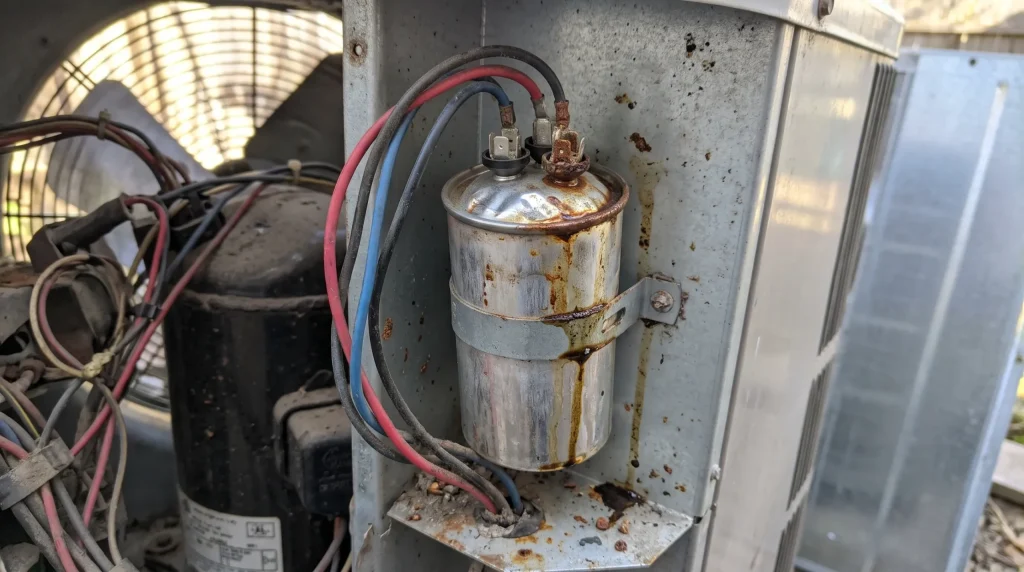
Why a bad capacitor makes your AC trip the circuit breaker
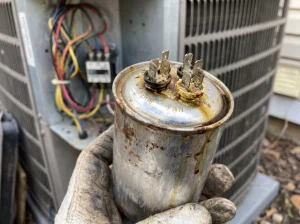
A weak capacitor can’t give the compressor and fan motor the starting boost they need. The compressor stalls and pulls several times its normal running current until the breaker, or the compressor’s internal overload, cuts the power. Capacitors wear out faster in heat, which is why so many fail on the hottest afternoons.
Symptom: The outdoor unit hums or buzzes for a few seconds, the fan doesn’t spin (or spins slowly), and then the breaker trips. A capacitor that has shorted internally can trip the breaker almost instantly.
Most likely cause: A run capacitor that has lost capacity from age and heat, or a failed start capacitor on units that have one. Many outdoor units use a single dual run capacitor for both the compressor and the fan, so one bad part can stop both. For background on the part itself, see what a capacitor does in your AC.
Fix steps:
- Set the thermostat to off.
- Leave the breaker off so the compressor isn’t forced through more failed starts.
- Note what you heard and saw: humming, whether the fan spun, and how long it ran before the trip. This helps the technician confirm the problem quickly.
Call a pro if: You suspect the capacitor at all. It can hold a dangerous charge after the power is off, and the replacement must match the original’s microfarad and voltage rating. It’s usually a quick, affordable HVAC repair. For every symptom to watch for, read Can a Bad Capacitor Make My AC Trip the Breaker? 6 Warning Signs.
2. A Dirty or Blocked Condenser Coil
How to fix an AC that trips the breaker because of a dirty condenser coil
The outdoor coil is where your AC releases the heat it pulled out of your home. When it’s coated in dirt, grass clippings, or cottonwood fluff, or boxed in by shrubs, that heat can’t escape. Pressure inside the system climbs, the compressor works harder, and its current draw rises until the breaker trips.
Symptom: The AC runs fine in the morning but trips the breaker after running a while on a hot afternoon. The air blowing out of the top of the unit feels only warm, and the cabinet may feel hot.
Most likely cause: A coil clogged with debris, or less than about two feet of clearance around the unit.
Fix steps:
- Turn the thermostat off, then shut off power at the outdoor disconnect box and the breaker.
- Clear leaves, grass, and debris from around the unit. Trim plants back at least two feet on every side.
- Gently rinse the coil fins with a garden hose. Never use a pressure washer, which flattens the fins.
- Restore power and run the system.
Call a pro if: The coil is matted or greasy, the fins are badly bent, or the breaker still trips after cleaning. Our guide to the signs your condenser coils are dirty covers what to look for. If your system runs almost nonstop all summer even with a clean coil, the house may be part of the problem. A structure energy review looks at insulation and airflow issues that force your AC to work harder than it should.
3. A Hard-Starting or Shorted Compressor
Why your AC trips the breaker when the compressor starts
The compressor is the biggest electrical load in your system, and startup is its hardest moment. An aging compressor, or one trying to start against high pressure, can stay in that high-current starting state too long and trip the breaker. A compressor with a shorted or grounded winding is worse: it trips the breaker every time it tries to run.
Symptom: You hear the outdoor unit click on, the lights may dim briefly, and the breaker trips within a few seconds. A grounded compressor usually trips it immediately, every time.
Most likely cause: Hard starting from age and wear, a weak capacitor that makes startup harder, or winding insulation that has broken down inside the compressor.
Fix steps:
- Turn the thermostat off and reset the breaker once.
- Wait at least five minutes before switching back to cool, so the system’s pressures can even out.
- Avoid flipping the thermostat off and on repeatedly, which forces the compressor to start against high pressure.
Call a pro if: It trips again on startup. A technician will test the capacitor first, then measure the compressor’s starting current and check its windings. A hard-start kit can help a healthy but aging compressor. A grounded compressor can’t be repaired, and on an older system that often makes HVAC replacement the better investment. For startup trips specifically, read Why Does My AC Trip the Breaker When the Compressor Kicks On? 5 Causes. For other symptoms like warm air or loud rattling, see our guide to an AC compressor not working.
4. A Failing Condenser Fan Motor
How to fix an AC tripping the breaker from a bad fan motor
The fan on top of the outdoor unit pulls air across the coil. If the motor is seizing or has failed, heat builds up the same way it does with a dirty coil, and the compressor’s current climbs until something trips. A motor with a shorted winding can also trip the breaker directly.
Symptom: The compressor runs (you can hear it), but the fan on top is still or turning slowly. You might notice grinding, squealing, or a hot electrical smell before the trip.
Most likely cause: Worn motor bearings, a failed motor winding, or a weak fan capacitor.
Fix steps:
- Turn the system off at the thermostat and the disconnect.
- Look through the top grille for sticks, leaves, or anything blocking the blades.
- Don’t push the fan with a stick while the unit is powered. It can seem to help, but it hides the real problem and puts you close to high voltage and moving blades.
Call a pro if: The fan won’t turn when the unit is running, or it turns slowly or noisily. Our guide to an AC fan not working covers the other causes.
5. Loose, Burnt, or Corroded Wiring
Why loose wiring makes an AC keep tripping the breaker
Every connection between your electrical panel and the compressor carries heavy current. Over the years, vibration loosens terminals, and heat and weather corrode them. Rodents and yard equipment can also damage the whip, which is the flexible conduit running to the unit. A loose connection overheats. Damaged insulation can let a live wire touch metal, which creates a short and trips the breaker instantly.
Symptom: Random trips with no clear pattern, a burning or melted-plastic smell near the disconnect or unit, buzzing, or scorch marks. The breaker itself may feel warm.
Most likely cause: Loose connections at the breaker, disconnect, or contactor; corroded terminals; or a damaged power whip.
Fix steps:
- Shut off power at the breaker.
- Walk around the unit and look, without touching, for chewed, cracked, or crushed conduit and wiring.
- Keep mowers, trimmers, and pets away from the whip.
Call a pro if: You smell burning or see any damage, because wiring faults are a fire hazard. A technician traces them with professional-grade electrical test meters, checking voltage and current at each connection and looking for heat. Buzzing is one of the noises that mean HVAC system trouble, so don’t ignore it.
6. A Pitted or Stuck Contactor
How to fix a contactor that makes your AC trip the breaker
The contactor is the switch inside the outdoor unit that sends power to the compressor and fan when the thermostat calls for cooling. Every cycle creates a small arc across its contacts, and over time they pit and burn. Pitted contacts make a poor connection and cause voltage drop, so the compressor starts harder and draws more current. Ants and other insects that nest in the contactor can make it worse.
Symptom: Chattering or buzzing from the outdoor unit, or clicking with no start. Another sign is an outdoor unit that keeps running after you turn the thermostat off, which means the contacts have welded shut.
Most likely cause: Worn, pitted, or welded contacts, or debris or insects inside the contactor.
Fix steps:
- If the outdoor unit won’t shut off, turn it off at the breaker.
- Note whether it clicks, chatters, or hums when the thermostat calls for cooling.
Call a pro if: You notice any of these symptoms. Replacing a contactor is typically a quick, low-cost repair, and waiting can take the compressor down with it. If clicking is your main clue, see why your HVAC system is making a clicking noise.
7. A Worn-Out or Wrong-Size Breaker
How to tell if a bad breaker is making your AC trip
Sometimes the AC is fine and the breaker is the problem. Breakers wear out, especially after many trips. A weak one can trip below its rated load, particularly in a hot garage or an outdoor panel in the afternoon sun. A breaker can also be the wrong size. Every outdoor unit has a nameplate listing its electrical requirements, and a breaker that’s too small for the unit will trip during normal operation.
Symptom: The breaker trips even though the unit sounds and runs normally. It may feel warm or not reset firmly. Trips that started after a new system went in, without the circuit being rechecked, also point here.
Most likely cause: A worn breaker, a loose connection at the breaker, or a breaker that doesn’t match the unit’s nameplate.
Fix steps:
- Find the nameplate on the side of the outdoor unit and note the maximum breaker or fuse size. Compare it with the number on the breaker handle. Reading both is safe; opening the panel is not.
- To reset the breaker, push it fully to off, then back to on. A tripped breaker often rests in a middle position.
- If the breaker trips again, get a professional involved rather than resetting it again. The Electrical Safety Foundation International gives the same advice for any breaker that keeps tripping.
Call a pro if: The breaker trips again. Never replace it with a larger breaker to stop the trips. The breaker protects the wiring, and oversizing it turns a nuisance into a fire hazard. A wrong-size breaker often traces back to the original HVAC installation or a system swap where the circuit wasn’t rechecked. To separate a breaker problem from an AC problem step by step, read Is My AC Breaker Bad or Is It the AC? 5 Ways to Tell.
8. Refrigerant Overcharge or Restriction
Why refrigerant problems can make your AC trip the breaker
The right refrigerant charge keeps the compressor’s pressure and current in their normal range. An overcharged system runs at high pressure, and on hot days the compressor draws extra current until the breaker trips. Overcharging is often the result of someone “topping it off” without measuring. A restriction in the refrigerant circuit, such as a clogged filter drier, can overheat the compressor as well.
Low refrigerant is more likely to freeze the indoor coil or trip the compressor’s internal overload than to trip the breaker. It still needs attention, because it means there’s a leak.
Symptom: Trips during the hottest part of the day after long run times, especially soon after a refrigerant service. With a low charge, you may see ice on the refrigerant lines.
Most likely cause: Too much refrigerant, a restriction in the lines, or a leak.
Fix steps:
- Turn the system off and leave the refrigerant alone. DIY recharge kits aren’t the answer for a home AC, and refrigerant work requires EPA Section 608 certification.
- If you see ice, set the thermostat to off and the fan to on to thaw it.
Call a pro if: You suspect any refrigerant issue. A technician checks the charge with gauges and temperature readings instead of guessing. An energy assessment goes further, verifying the system’s performance, settings, and airflow so a bad charge doesn’t quietly cost you all summer. If you want the technical details, ACHR News, a long-running HVAC trade publication, covers refrigerant charging and troubleshooting in depth.
9. A Power Surge or Storm Damage
How to fix an AC that keeps tripping the breaker after a storm
North Texas storms bring lightning, grid surges, and power that flickers off and on. A surge can damage the capacitor, contactor, control board, or compressor windings in an instant. A system that restarts before its pressures settle after an outage can also trip the breaker on the first try. Hail and flooding can damage the outdoor unit directly.
Symptom: The AC trips the breaker after a thunderstorm or outage when it ran fine before. You may also notice a burning smell or a blank thermostat.
Most likely cause: A surge-damaged component, a restart right after power returned, or water or debris damage to the outdoor unit.
Fix steps:
- During an outage, set the thermostat to off.
- Once power is back and stable, wait about five minutes, then turn cooling back on.
- When the National Weather Service issues a severe thunderstorm warning for your area, consider turning the AC off until the lightning passes.
- Ask a licensed electrician about a whole-home surge protector for long-term protection.
Call a pro if: It trips again, you smell burning, or the unit sat in standing water. Never run a flooded unit before it’s inspected. For more on what to check after bad weather, see how power surges damage HVAC systems and hidden HVAC damage from severe storms.
DIY-Safe Checks vs. When to Call a Pro
What you can safely check when your AC trips the breaker
|
Cause |
When it usually trips |
Safe to do yourself |
Call a pro when |
|
Weak capacitor |
The moment the unit tries to start |
Note the humming and whether the fan spins |
Always, since it holds a charge |
|
Dirty condenser coil |
After running a while on hot afternoons |
Clear debris, trim plants, hose-rinse with power off |
Trips continue after cleaning |
|
Hard-starting or shorted compressor |
Within seconds of startup, or instantly if grounded |
Reset once, wait five minutes |
It trips again on startup |
|
Failing fan motor |
After a few minutes of running |
Clear debris from the blades with power off |
Fan won’t spin or is noisy |
|
Loose or burnt wiring |
Randomly, or instantly if shorted |
Look for damaged conduit without touching |
Any burning smell or visible damage |
|
Pitted or stuck contactor |
At startup, or the unit won’t shut off |
Turn it off at the breaker if it won’t stop |
Any chattering, buzzing, or clicking |
|
Worn or wrong-size breaker |
Even when the AC runs normally |
Compare the breaker to the nameplate, reset once |
It trips again or feels warm |
|
Refrigerant problem |
Hot afternoons after long run times |
Thaw ice with the fan on |
Always, since it requires EPA certification |
|
Surge or storm damage |
First start after a storm or outage |
Wait five minutes after power returns |
It trips again or the unit was flooded |
Stop Resetting and Fix the Real Cause
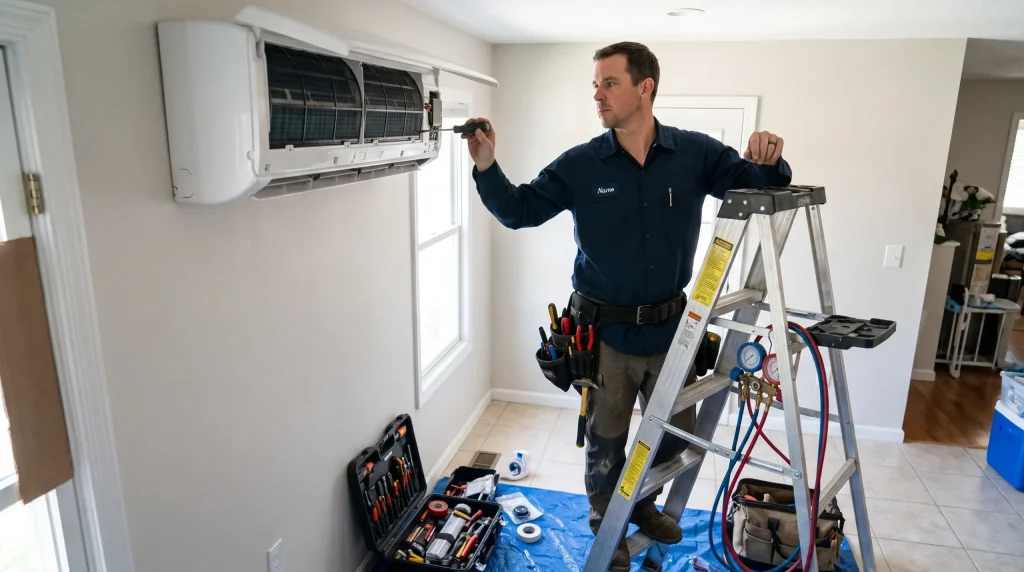
How to keep your AC from tripping the circuit breaker again
Most breaker trips trace back to a handful of parts under stress: the capacitor, coil, fan motor, contactor, and compressor. That makes prevention predictable too. Keep the outdoor coil clean, and schedule a yearly tune-up that tests the capacitor, measures amp draw, and tightens electrical connections. That catches most of these problems before they trip anything. Here’s what a professional AC tune-up checks.
If your breaker has tripped more than once, AC Repair DFW can help. Our licensed technicians serve Bedford and the surrounding DFW area, and they’ll find the real cause instead of just resetting the breaker. Book same-day AC repair or request a free quote.