Most Bedford, TX homeowners do the same thing after a severe storm blows through. They walk outside, check the roof, scan the yard for fallen branches, maybe peek at the gutters, and then head back inside, assuming everything is fine. But there is one thing that almost always gets overlooked: the HVAC system. North Texas storms are no joke. The DFW area regularly deals with hailstorms, high winds reaching 60 to 80 mph, flash flooding, and lightning strikes that can send power surges through an entire neighborhood in a split second. All of that weather puts serious stress on the home’s heating and cooling system, including the outdoor condenser unit that sits exposed in the backyard 365 days a year.
Here is the part that catches most homeowners off guard: the damage is not always obvious right away. The AC might still turn on, cold air might still come out of the vents, and everything might feel completely normal, at least for a little while. That is exactly why storm-related HVAC repair needs should never be ignored or put off. By the time a homeowner notices something is wrong, what started as a minor repair has turned into a costly system failure, often on the hottest day of the summer when the demand on the system is at its peak.
Why Bedford, TX Homeowners Face a Higher Risk of Storm-Related HVAC Damage
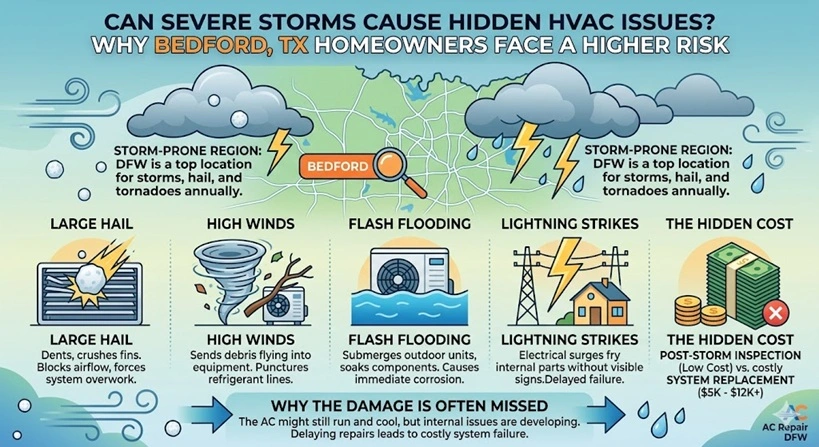
Bedford is located right in the middle of the Dallas-Fort Worth metroplex, one of the most storm-prone regions in the entire United States. The National Weather Service consistently ranks the DFW area among the top locations for severe thunderstorm activity, hail events, and tornado warnings year after year.
That means HVAC systems in Bedford face:
- Large hail that can dent, crush, and bend the delicate components of an outdoor condenser unit
- High wind gusts that send debris flying directly into equipment
- Flash flooding that can submerge outdoor units and soak indoor components
- Lightning and power surges that fry electrical parts without leaving any visible signs
For homeowners who want to stay ahead of the damage before the next storm arrives, How to Avoid HVAC Issues During Severe Weather is a must-read.
7 Hidden HVAC Issues Severe Storms Can Cause
1. Hail Damage to the Condenser Coils and Fins
What Happens
The outdoor condenser unit is surrounded by thin aluminum fins that help the system release heat into the outside air. When hail strikes the unit, those fins bend, crush, and flatten. Damaged fins block proper airflow, which forces the entire system to work harder than it should.
Why It Is Easy to Miss
The unit will still run after hail damage. The air inside the home might still feel cool. But behind the scenes, the system is overworking, which leads to higher energy bills, reduced cooling efficiency, and eventually, compressor wear that shortens the life of the entire unit.
What to Check
After any hailstorm, walk around the outdoor unit and look at the metal casing on the sides. If the surface looks dented or crumpled, the aluminum fins inside are likely damaged as well. Compare how the top grill looks versus photos from before the storm, if available.
Damaged fins also make the system more vulnerable to humidity-related problems, especially in North Texas. What HVAC Issues Does High Humidity Trigger is worth a read to understand how moisture can compound existing storm damage.
2. Power Surges That Damage Capacitors and Control Boards
What Happens
Lightning does not have to strike the home directly to cause serious HVAC damage. A nearby lightning strike sends electrical surges through the power lines, and those surges travel straight into the home’s HVAC system. The two components most vulnerable to surge damage are the capacitor, which helps start and run the compressor motor, and the control board, which acts as the brain of the entire system.
Why It Is Easy to Miss
Surge-damaged components do not always fail right away. Sometimes they continue working for several days before giving out completely. Homeowners assume the storm came and went without issue, and then the system suddenly stops working on a 100-degree afternoon in July.
What to Check
Pay close attention to any unusual behavior in the days following a major storm. A system that clicks repeatedly but does not start, a unit that hums but does not cool, or a breaker that keeps tripping are all signs that a surge may have caused internal damage.
To get a deeper understanding of how electrical spikes affect heating and cooling equipment, Are Power Surges Responsible for HVAC Issues covers everything a homeowner needs to know.
3. Refrigerant Line Damage From Flying Debris
What Happens
High winds during a severe storm can turn everyday yard objects into fast-moving projectiles. Patio furniture, fence boards, tree branches, and even trash can lids can hit an outdoor HVAC unit with enough force to bend or dent the copper refrigerant lines running between the indoor and outdoor units. In more severe cases, debris can actually puncture those lines and cause a refrigerant leak.
Why It Is Easy to Miss
Small refrigerant leaks develop slowly. The system might cool the home just fine at first, but gradually the refrigerant level drops and the system struggles to reach the desired temperature. Many homeowners assume the thermostat is acting up or that the house just “runs warm” before a technician discovers a refrigerant issue.
What to Check
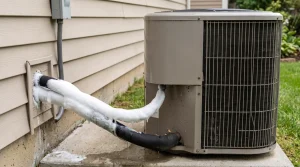
After a storm with heavy winds, visually inspect the copper refrigerant lines running into the outdoor unit. Look for visible bends, kinks, or dents. Also, check for any oily residue or discoloration around the connection points, which can indicate a slow leak.
Tip
Refrigerant handling is regulated by the EPA and must only be performed by a licensed HVAC technician. If a refrigerant leak is suspected, shut the system off and call a professional. Running the system with low refrigerant levels can permanently damage the compressor, which is the most expensive component to replace.
4. Water Intrusion in the Air Handler or Ductwork
What Happens
Heavy rainfall and flash flooding can push water into areas of the home that most people never think to check: the attic, the crawl space, and the ductwork. When moisture gets inside air ducts or around the indoor air handler unit, it creates ideal conditions for mold and mildew growth inside the HVAC system.
Why It Is Easy to Miss
Mold growing inside ductwork is invisible from the outside. The system runs, the air feels cool, and everything seems normal. The warning sign comes through smell, specifically a musty or damp odor that appears every time the air conditioner turns on. By then, mold spores are being pushed through every vent in the home.
What to Check
After a heavy rain event, check around the indoor air handler unit for any signs of moisture, dripping, or standing water. When the AC kicks on for the first time after the storm, pay attention to the smell of the air coming from the vents. A musty smell is a red flag that should not be ignored.
5. Debris-Clogged Condenser Unit Blocking Airflow
What Happens
After a strong storm, the outdoor condenser unit often ends up surrounded by, and sometimes packed with, leaves, dirt, grass clippings, small branches, and other debris. All of that material blocks airflow through the unit, causes the system to overheat, and puts extra strain on the compressor.
Why It Is Easy to Miss
The unit will still turn on and run. But it will run for longer cycles, use more energy, and wear down faster than normal. Many homeowners do not notice until the electric bill arrives and it is significantly higher than expected.
What to Check
After every major storm, take a few minutes to walk around the outdoor unit. Look at the sides and the top grill for debris buildup. Check whether any vegetation has been pushed up against the sides of the unit by wind or rain.
Tip
Gently rinse the outside of the condenser with a standard garden hose to clear surface dirt and debris. Avoid using a pressure washer, as the high pressure can bend the fins and cause further damage. Always maintain a clearance of at least 18 to 24 inches around the unit to allow proper airflow. This is one of the simplest and most effective free maintenance steps a homeowner can take.
6. Disconnected or Damaged Ductwork From Wind Pressure
What Happens
Homes with ductwork running through attics or crawl spaces are vulnerable to a problem that almost no one thinks about: wind pressure during a severe storm can actually shake duct sections loose from their connections. When that happens, conditioned air gets pumped directly into the attic or crawl space instead of into the living areas of the home.
Why It Is Easy to Miss
Some cold air still comes out of most vents, so the system appears to be working. But certain rooms feel noticeably warmer than others, or the whole house takes much longer to cool down. Homeowners often assume the thermostat is the problem or that the unit is just undersized for the space.
What to Check
After a storm, walk through every room in the home. If some rooms are significantly warmer or stuffier than others despite the AC running, that is worth investigating. If it is safe to access the attic, listen near duct connections for any hissing sound, which indicates air escaping from a loose joint.
7. Flood Damage to the Outdoor Condenser Unit
What Happens
Bedford and the surrounding DFW area see flash flooding regularly, and outdoor HVAC condenser units sit at ground level directly in the path of rising water. When floodwater gets into the unit, it reaches the electrical components, the motor, and the base of the system. Even after the water recedes, internal corrosion begins immediately and can cause components to fail days or weeks later.
Why It Is Easy to Miss
Once the water dries up, the unit looks completely normal from the outside. Homeowners turn it back on and assume everything is fine. Then the system shorts out, or a corroded component fails, and the damage ends up being far worse than it would have been with a professional inspection beforehand.
What to Check
If floodwater rose to the base of the outdoor unit or higher during a storm, treat that as a serious situation regardless of how the unit looks on the outside.
Tip
Do not turn the system on if it was flooded. This is one of the most important steps a homeowner can take. Running a flooded unit risks an electrical short and can permanently damage the compressor. Contact a licensed HVAC technician to inspect the unit before powering it back on. Depending on the extent of the damage, flood-related HVAC damage may be covered under a homeowner’s insurance policy, so it is worth reviewing the policy and filing a claim if appropriate.
Post-Storm HVAC Checklist for Bedford, TX Homeowners
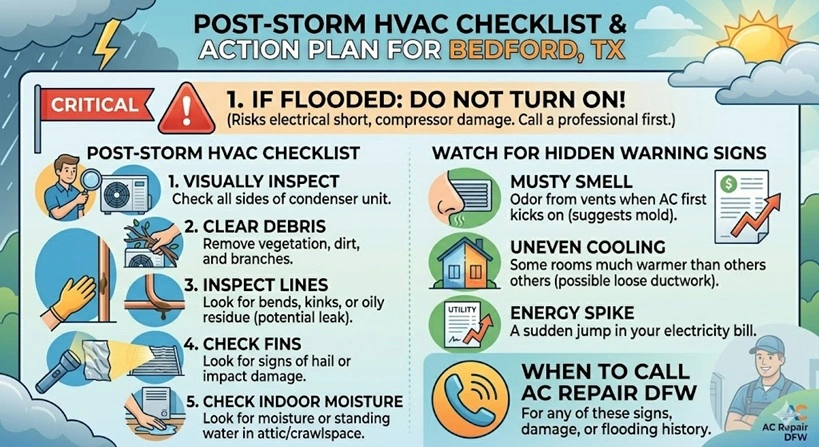
After every severe storm, run through this quick checklist before assuming everything is fine:
- Visually inspect the outdoor condenser unit from all sides
- Clear any visible debris from around and on top of the unit
- Inspect the copper refrigerant lines for bends, kinks, or oily residue
- Check the condenser fins for signs of hail or impact damage
- Check the area around the indoor air handler for moisture or standing water
- Smell the air from the vents when the AC first kicks on
- Walk through all rooms to check for uneven cooling
- Check the breaker panel for any tripped breakers
- If the unit was flooded, do not turn it on until a professional inspects it
When to Call a Licensed HVAC Professional in Bedford, TX
Some situations call for an immediate phone call rather than a wait-and-see approach. Contact a licensed HVAC technician right away if any of the following are true:
- The system does not turn on at all after the storm
- A burning smell or musty odor comes from the vents
- The energy bill spikes without any change in usage habits
- The system runs constantly but cannot reach the set temperature
- Visible damage is present on the outdoor unit
- Any part of the HVAC system was exposed to floodwater
Protecting the HVAC System Before the Next Storm Hits
Prevention is always less expensive than repair. A few simple steps can reduce the risk of storm-related HVAC damage before severe weather arrives:
- Schedule annual maintenance visits to make sure the system is in peak condition before storm season
- Install a whole-home surge protector and a dedicated HVAC surge protector to guard against lightning-related damage
- Keep trees and shrubs trimmed away from the outdoor unit to reduce flying debris risk
- Strap down or bring in outdoor furniture before a storm to prevent it from becoming a projectile
- Know the location of the disconnect switch for the outdoor unit so it can be shut off quickly if flooding is approaching
Stay Ahead of Storm Damage Before It Costs You
Severe storms are a regular part of life in Bedford, TX, and the DFW area is not going to get any calmer. The good news is that storm-related HVAC damage does not have to turn into a major financial disaster as long as homeowners know what to look for.
A quick walk-around inspection after every storm, combined with a professional HVAC inspection when something seems off, can add years to the life of the system and save thousands of dollars in avoidable repairs, including the cost of a full HVAC replacement.
The HVAC system works hard every single day to keep the home comfortable through brutal Texas summers and unpredictable winters. Taking a few extra minutes after a storm to check on it is one of the smartest things a Bedford homeowner can do.
Trusted Local HVAC Help Is Just a Phone Call Away
When it comes to trusted HVAC service in the DFW area, AC Repair DFW has built a solid reputation for fast, reliable, and honest work. From post-storm inspections to full system repairs, our team of licensed technicians knows exactly what to look for and how to fix it right the first time, giving Bedford homeowners the peace of mind they deserve after every storm rolls through. Do not wait for a small problem to turn into a major repair. Contact us today or give us a call to schedule a post-storm HVAC inspection with us and keep the home running at its best all year long.