Bedford, TX, sits right in the heart of Tarrant County, and the weather here does not hold back. Summers regularly push past 100 degrees Fahrenheit, winter storms can drop ice overnight without warning, and spring brings hail, high winds, and thunderstorms that can roll through in a matter of minutes.
All of that puts serious pressure on your HVAC system.
The tough reality is that most HVAC failures that happen right after a severe storm are not caused by the storm itself. They are caused by existing problems that the storm simply made worse. A dirty filter that was already restricting airflow. A loose electrical connection that a power surge finally broke. A condenser unit sitting under years of debris buildup finally gave out when it needed to work hardest. In the worst cases, storm-accelerated damage can push a system past the point of repair and straight into HVAC repair territory.
The good news is that severe weather does not have to mean an HVAC breakdown. With the right preparation and a few key things to check before and after a storm, Bedford homeowners can protect their systems and avoid the discomfort and cost of an emergency repair.
Quick Answer: To avoid HVAC issues during severe weather in Bedford, TX: schedule a pre-season inspection, install a surge protector, clear debris around the outdoor unit, change your air filter regularly, shut the system down during heavy electrical storms, and have a trusted local HVAC company on call before storm season starts.
10 Ways to Protect Your HVAC System During Severe Weather in Bedford, TX
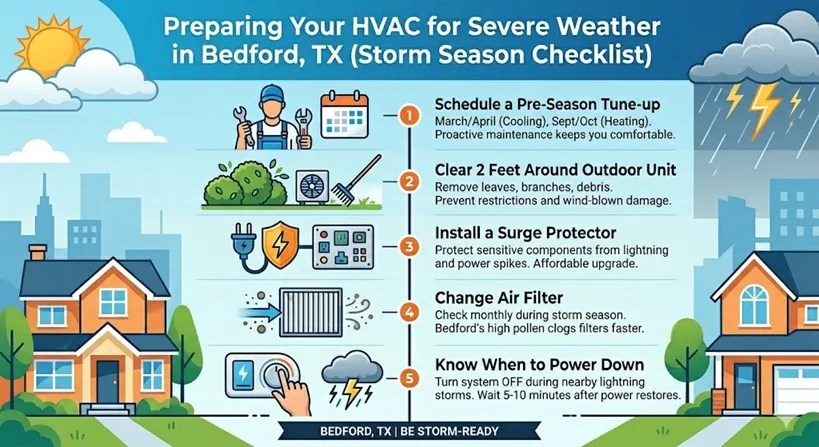
1. Schedule a Pre-Season HVAC Inspection Before the Storms Arrive
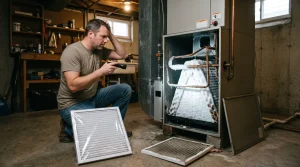
The single most effective thing a Bedford homeowner can do is schedule a professional HVAC inspection before storm season begins. In North Texas, that means booking a cooling system tune-up in March or April, and a heating system check in September or October, before extreme temps hit.
A licensed technician will check things that are not visible to the average homeowner, including refrigerant charge levels, electrical connection tightness, belt and motor condition, thermostat calibration accuracy, and ductwork integrity. These are the exact components that take the hardest hit during severe weather.
What gets checked during a professional tune-up:
- Refrigerant levels and pressure readings
- Electrical wiring and connection points
- Capacitors and contactors
- Blower motor and fan belts
- Thermostat calibration
- Condensate drain line
- Ductwork for leaks and obstructions
Skipping this step is one of the most common reasons Bedford homeowners end up calling for emergency service in the middle of a heat wave. Every HVAC company in the DFW area gets flooded with calls when temps spike. Proactive maintenance keeps homeowners off that waitlist.
The average cost of a professional HVAC tune-up is considered a low-to-moderate expense compared to what an emergency repair or full system replacement costs. The investment is almost always worth it.
For a deeper look at what storms can do beneath the surface, check out the full guide on Can Severe Storms Cause Hidden HVAC Issues to understand the damage that often goes undetected until it is too late.
2. Protect the Outdoor Condenser Unit from Hail and Storm Debris
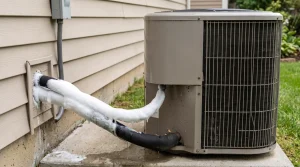
The outdoor condenser unit is the most vulnerable part of any HVAC system during a severe storm. It sits completely exposed to hail, high winds, flying debris, and flooding, and a single bad hail event can dent the condenser fins, bend fan blades, or crack refrigerant lines.
Bedford and the surrounding DFW area regularly experience hail events during the spring and early summer storm season. Hailstones do not need to be golf ball-sized to cause damage. Even quarter-sized hail can flatten the aluminum fins on a condenser coil, which restricts airflow and makes the entire system work harder to do its job.
What to visually inspect after a hail storm:
- Dented or crushed fins on the condenser coil
- Bent or cracked fan blades inside the unit
- Any visible refrigerant line damage
- Clogged fins from dirt, leaves, or debris
Minor fin damage can sometimes be addressed by a technician using a fin comb tool, but internal damage requires a professional assessment. Attempting to straighten or repair fins without experience often makes the problem worse.
One important rule: Never place a tarp or cover over a running HVAC unit. Protective covers are only appropriate when the system is completely off, and a storm is actively approaching.
Storms also bring a spike in moisture levels that can quietly wear down the system over time, and What HVAC Issues Does High Humidity Trigger breaks down exactly what happens to an HVAC unit when humidity gets out of control in North Texas.
3. Install a Surge Protector on the HVAC System
Power surges are one of the leading causes of HVAC damage in Bedford, and most homeowners do not think about surge protection until after something gets fried.
A severe thunderstorm brings lightning. Lightning causes power fluctuations. Those fluctuations travel through the electrical system and into sensitive HVAC components like the control board, compressor, and capacitors. A single strong surge can damage or destroy any of those parts, and in many cases, standard home warranties do not cover surge-related damage unless a dedicated surge protector was in place.
Signs the HVAC system took a surge hit:
- The system will not turn on after a storm
- The thermostat display is blank or behaving erratically
- The circuit breaker keeps tripping
- The outdoor unit hums, but the fan does not spin
A licensed HVAC technician can install a dedicated surge protector directly on the system, and adding a whole-home surge protector at the electrical panel provides an additional layer of protection. Both are affordable upgrades that provide real protection for a system that often costs thousands of dollars to replace.
To get a full picture of how electrical spikes affect HVAC equipment and what it can cost to ignore them, the guide on Are Power Surges Responsible for HVAC Issues is worth a read before the next storm season hits Bedford.
4. Keep the Area Around the Outdoor Unit Clear of Debris
This one sounds simple, but it gets overlooked constantly. Keeping a clear zone around the outdoor condenser unit is one of the easiest ways to prevent weather-related HVAC problems in Bedford.
The general rule is at least two feet of clearance on all sides of the unit. That means trimming back shrubs, removing stacked items, and clearing any leaves or yard waste that has accumulated around the base.
During a severe storm, high winds turn branches, leaves, and yard debris into projectiles. After a storm passes, it is worth doing a quick walkthrough of the outdoor unit to check for anything that landed on or around it.
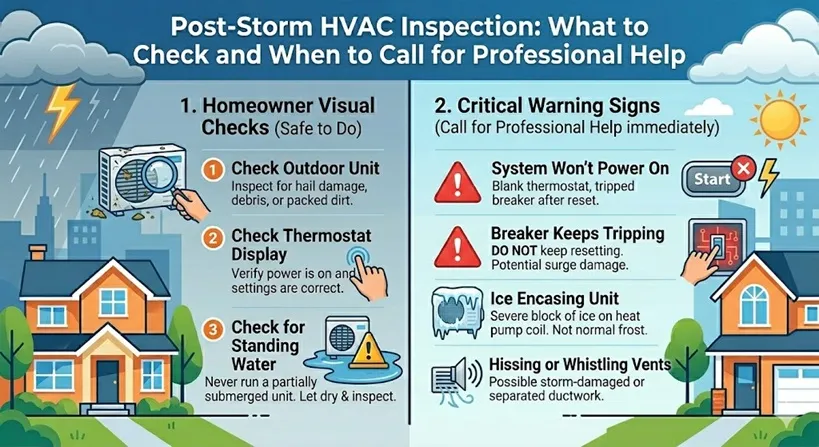
Post-storm outdoor unit checklist:
- Check for branches or large debris sitting on or against the unit
- Look for mud or dirt packed into the fins
- Check for standing water pooled around the base
This last point is critical. Never run an HVAC system that has been partially submerged in floodwater. Doing so creates a serious electrical hazard and risks destroying the motor. Let the unit dry completely and have a professional inspect it before powering it back on.
5. Change the Air Filter Before and After Severe Weather
A clogged air filter is one of the top causes of HVAC breakdowns year-round, and storms in North Texas make the problem significantly worse. Dust, pollen, and debris stirred up by severe weather can clog a filter quickly, restricting airflow and forcing the system to strain under the load.
In Bedford, where spring brings heavy pollen season right alongside storm season, filter maintenance is especially important.
Recommended filter replacement schedule for Bedford, TX:
- Standard 1-inch filters: every 30 to 60 days
- Thicker 4 to 5-inch media filters: every 6 to 12 months
- During storm season, check filters monthly regardless of type
Warning signs that the filter needs attention:
- Weak or reduced airflow from vents
- A dusty or musty smell coming from the system
- Higher-than-normal energy bills
- Short-cycling, meaning the system turns on and off frequently without completing a full cycle
Replacement filters are easy to find at local hardware stores in Bedford, including the Home Depot on Airport Freeway and the nearby Lowe’s. Keeping a few extras on hand means there is no reason to delay a swap after a storm.
6. Know When to Turn the HVAC System Off During a Storm
A lot of Bedford homeowners do not realize that running an HVAC system during an active lightning storm increases the risk of surge damage. When lightning is striking nearby and power is flickering, the safest move is to switch the system off at the thermostat until the storm fully passes.
Situations that call for shutting the system down:
- Frequent lightning in the immediate area
- Power flickering or surging in the home
- Tornado warnings issued for Tarrant County
After power is restored following an outage, wait five to ten minutes before turning the system back on. This brief pause allows voltage to stabilize and reduces stress on the compressor, which is one of the most expensive components in any HVAC system.
7. Prepare the HVAC System for North Texas Ice Storms
The 2021 Winter Storm Uri left millions of Texans without heat for days, and Bedford was no exception. Most HVAC systems in North Texas are not designed for extended sub-freezing temperatures, and ice storms create a unique set of challenges that summer maintenance alone does not address.
Pre-freeze checklist for Bedford homeowners:
- Confirm the furnace filter is clean and unrestricted
- Verify the heat exchanger is functioning properly (a cracked heat exchanger is a safety hazard that requires immediate professional attention)
- Clear any ice or snow buildup from exhaust vents and flue pipes
- If the home has a heat pump, understand that efficiency drops significantly below 35 degrees Fahrenheit, and the system should automatically switch to auxiliary or emergency heat
Warning signs the system is struggling in cold weather:
- The outdoor unit is completely encased in ice (a thin layer of frost is normal during winter operation; a solid block of ice is not)
- The system runs constantly, but the home does not reach the set temperature
- Unusual sounds like grinding, banging, or squealing from the unit
If the outdoor heat pump unit freezes over completely, resist the urge to chip the ice off manually. This can cause serious damage to the fins and coil. Switching the system to fan-only mode for a short period can help initiate a defrost cycle. If that does not resolve it, a Bedford HVAC technician should assess the unit before it is run again.
8. Inspect the Ductwork After Any Major Storm
Ductwork damage is one of the most commonly missed storm-related HVAC issues in Bedford homes. High winds and sudden pressure changes during severe storms can loosen duct connections in attics and crawlspaces, creating gaps that allow conditioned air to escape before it ever reaches the living areas.
When ducts separate or develop leaks, the system has to work harder to compensate. This drives up energy bills and puts unnecessary strain on the equipment.
Signs that ductwork may have been affected by a storm:
- Uneven heating or cooling from room to room
- Dusty air blowing from the vents
- Energy bills that spike noticeably after a storm
- A whistling or hissing sound coming from the vents
Duct repairs are not a DIY project. A licensed HVAC professional can perform a duct leakage test and use appropriate sealing materials to restore integrity to the system. Improper DIY sealing attempts often create additional airflow restrictions rather than fixing the original problem.
9. Check the Thermostat After Every Major Storm
The thermostat is the brain of the HVAC system, and it is more vulnerable to storm-related disruption than most homeowners realize. Power surges, humidity spikes, and electrical fluctuations during a storm can cause the thermostat to malfunction, even when the rest of the system appears to be running normally.
A thermostat issue after a storm can look like a compressor failure or a refrigerant problem, which is why it should always be the first thing checked before calling for service.
Post-storm thermostat checklist:
- Is the display on and showing the correct temperature reading?
- Is the system responding when the temperature setting is changed?
- Are the programmed settings still saved?
- Is the system calling for heating or cooling, but nothing is actually happening?
The first fix to try: Replace the thermostat batteries. This simple step solves a surprising number of post-storm service calls in the Bedford area. If the thermostat still will not respond after a battery replacement, the unit may need recalibration or full replacement, which is a straightforward service call for any local HVAC technician.
10. Have a Trusted Local HVAC Company on Speed Dial Before Storm Season
This is not about having a contractor on retainer. It is about being prepared before the phones get busy.
After any major weather event in Bedford and throughout the DFW area, HVAC companies receive hundreds of calls within a short window. Homeowners who already have a relationship with a local company, or at least have their number saved and know their service area, get taken care of faster than those scrambling to find help in the middle of a crisis.
What to look for in a Bedford, TX HVAC company:
- Texas TDLR licensing and proof of insurance
- Local Google reviews with consistent 4.5-star ratings or higher
- Availability for emergency or same-day service calls
- Transparent pricing before any work begins
- Familiarity with North Texas climate conditions and the demands they place on residential systems
Before storm season, make sure the following is in place:
- A trusted HVAC company contact is saved in the phone
- A basic understanding of the system’s age, brand, and last service date
- A maintenance agreement or service plan is required if the system is older or has had previous issues
Knowing the system’s history makes communication with a technician faster and more productive when time is critical.
Protect Your HVAC Before the Next Storm Hits
Bedford, TX, weather is going to test every HVAC system in the area, year after year. That is just the reality of living in North Texas. But severe weather does not have to mean a costly breakdown, a week without cooling in July, or a frozen home during an ice storm.
The homeowners who come through storm season in the best shape are almost always the ones who did not wait for something to break before taking action. A pre-season inspection, clean filters, a surge protector, and a clear outdoor unit go a long way toward keeping a system protected.
And when something does seem off after a storm, the smart move is always to contact a licensed HVAC professional in the Bedford area. Catching a problem early is almost always faster, easier, and far less expensive than waiting until the system stops working entirely. The last thing any Bedford homeowner wants to deal with in the middle of storm season is an emergency HVAC replacement when a little proactive maintenance could have prevented it.
Bedford’s Trusted Local HVAC Experts Are Ready to Help
When it comes to reliable HVAC service across Bedford and the greater DFW area, AC Repair DFW brings the experience, licensing, and local knowledge that North Texas homeowners can count on. From pre-season tune-ups and surge protection installs to post-storm inspections and emergency repairs, our team is equipped to handle whatever the weather throws at a system, and they know exactly what Bedford homes need to stay comfortable all year long. Do not wait for a breakdown to make the call. Contact us today or give us a call and let us get the system storm-ready before the next severe weather event hits Bedford.