Quick answer: Replacing an AC compressor in Dallas-Fort Worth typically costs $1,800 to $4,000 out of warranty, including the part, labor, and refrigerant. If the compressor is still under a manufacturer parts warranty, expect roughly $900 to $2,000 for labor and refrigerant. Two-stage and variable-speed compressors cost more. On a system older than 12 to 15 years, a new outdoor unit or full system is often the better value.
Key takeaways
- The compressor is the most expensive part in your AC, so confirm the diagnosis before you pay. A bad capacitor or contactor can make a healthy compressor look dead.
- Check your warranty first. Many manufacturers cover compressors for 10 years on registered equipment.
- System age and refrigerant type often decide whether a compressor replacement makes sense. R-22 systems rarely justify a new compressor.
- Ask what caused the failure. Without fixing the root cause, a new compressor can fail the same way.
- Compare the quote against a new outdoor unit and a full system before deciding.
- Compressor replacement requires EPA certification, brazing, and a full system evacuation. It is never a DIY job.
AC Compressor Replacement Cost in DFW
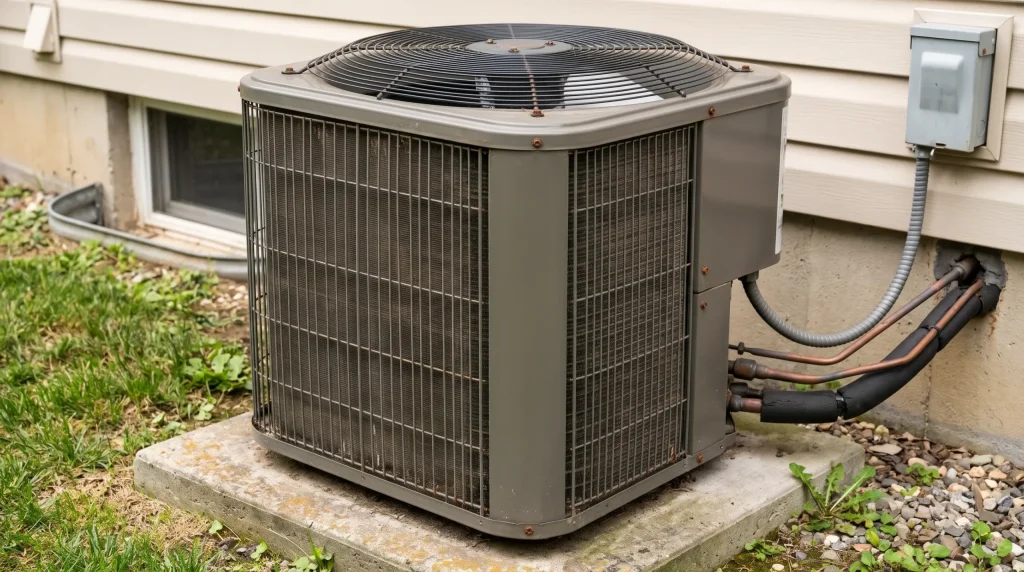
How much AC compressor replacement costs in 2026, with and without warranty
Most homeowners pay $1,800 to $4,000 out of warranty. Warranty coverage, compressor type, and system size move the price the most.
|
Job |
Typical DFW cost (parts + labor) |
Notes |
|
Diagnostic visit |
$75 to $150 |
Often waived or credited if you approve the repair |
|
Hard-start kit (when the compressor struggles but still works) |
$200 to $450 |
Worth trying before replacement on some older units |
|
Single-stage compressor, out of warranty |
$1,800 to $3,000 |
Most common residential type |
|
Two-stage or variable-speed compressor, out of warranty |
$2,500 to $4,500 |
Higher-efficiency systems |
|
Compressor under parts warranty (labor and refrigerant only) |
$900 to $2,000 |
Varies with refrigerant type and access |
|
New outdoor condensing unit |
$3,500 to $7,000 |
Must be matched to your indoor coil |
|
Full system replacement |
$7,000 to $15,000 or more |
Depends on size, efficiency, and ductwork |
Every compressor replacement also includes new refrigerant, a new filter drier, a full vacuum, and several hours of labor. For prices on other common repairs, see How Much Does AC Repair Cost in DFW? 12 Common Repairs and What Drives the Price.
Signs Your AC Compressor May Be Failing
How to tell if your AC compressor is going bad
A failing compressor usually shows up as warm air from the vents while the outdoor unit runs, struggles, or trips the breaker. These signs justify a diagnostic visit, not an immediate replacement.
- Warm air with the outdoor unit running. The fan spins, but the air inside never gets cold.
- Loud clanking, grinding, or rattling from the outdoor unit. Our guide to what noises mean HVAC system trouble explains what each sound usually points to.
- A breaker that trips every time the outdoor unit tries to start.
- Hard starts. The unit hums, struggles, and shuts off before it gets going.
- Rising bills with no change in how you use the system.
Our post on why your AC compressor is not working covers the symptoms in more detail, and these warning signs your HVAC system is about to quit help you catch problems early. If you see any of them, turn the system off and schedule HVAC repair. Running a struggling compressor can turn a small electrical fix into a full replacement.
Question 1: Has the Compressor Actually Been Tested?
How a technician confirms your AC compressor is really bad
Ask this first, because misdiagnosis is common. Compressor manufacturers have reported that a large share of compressors returned under warranty turn out to have nothing wrong with them.
A proper diagnosis includes:
- A capacitor test. A failed capacitor is the most common reason a good compressor will not start.
- A contactor and wiring check. Burned contacts or loose wires can stop the compressor cold.
- A winding resistance test across the compressor terminals with the power off.
- Amp draw and pressure readings with the compressor running, if it will start.
If you were told “the compressor is dead” without these tests, get a second opinion. Many “dead compressor” calls end with a $150 to $400 part, as explained in How Much Does It Cost to Replace an AC Capacitor? 5 Signs It’s the Capacitor, Not the Compressor.
Question 2: Is the Compressor Still Under Warranty?
How an AC compressor warranty lowers your replacement cost
A manufacturer warranty can cut a compressor replacement nearly in half. Many brands cover the compressor for 10 years on equipment registered within a set window after installation, often 60 to 90 days. Unregistered equipment may get a shorter term, commonly 5 years.
The warranty usually covers the part only. You still pay for labor, refrigerant, and the filter drier, which typically totals $900 to $2,000. Find the model and serial number on your outdoor unit and ask the technician to check coverage before quoting. Some installers also include a labor warranty for the first year or longer.
Question 3: How Old Is the System, and What Refrigerant Does It Use?
When AC compressor replacement is worth it based on system age
Age and refrigerant type often decide the answer before cost does.
- Under 10 years old: A compressor replacement is often worth it, especially under warranty.
- 10 to 15 years old: Compare the repair cost against a new outdoor unit or system. Efficiency gains on newer equipment can offset part of the difference.
- Over 15 years old, or using R-22: Replacement usually makes more sense. R-22 is no longer produced, so recharging after a compressor swap is expensive, and the rest of the system is near the end of its life.
Check the nameplate on your outdoor unit for the install date and refrigerant type. If a refrigerant leak contributed to the failure, add that repair to the math, using How Much Does an AC Refrigerant Leak Repair Cost? 7 Factors That Change the Price as your guide.
Question 4: What Caused the Compressor to Fail?
Why finding the root cause protects your new AC compressor
Compressors rarely fail on their own. If the cause is not fixed, the new compressor can fail the same way. Ask your technician which of these played a part:
- Low refrigerant from a leak, which overheats the compressor.
- A dirty condenser coil that traps heat. Here is why your outdoor AC unit is not cooling when the coils are dirty.
- Electrical problems, including surges after North Texas storms. Power surges are a common cause of HVAC issues.
- Weak capacitors or contactors that caused repeated hard starts.
- Restricted airflow from clogged filters or collapsed ducts, which can send liquid refrigerant back to the compressor.
Sometimes the house is part of the problem. Leaky ducts and a hot, poorly insulated attic make a system run for hours at a time. An energy assessment measures how your equipment performs, and a structure energy review checks insulation and air leaks so your next compressor does not work as hard.
Question 5: Would a New Outdoor Unit or Full System Be a Better Value?
How to compare AC compressor replacement against a new system
Always get three numbers before you decide: the compressor replacement, a new outdoor unit, and a full system. Two rules of thumb from the field help:
- The $5,000 rule. Multiply the repair cost by the system’s age in years. Over $5,000 points toward replacement.
- The 50 percent rule. If the repair costs half or more of a new system, replacement is usually the better investment.
A new outdoor unit must be matched to your indoor coil, or efficiency and warranty can suffer. If you choose HVAC replacement, ask for a matched system. Proper HVAC installation, including correct sizing and a clean refrigerant line set, protects the new compressor for years. If you have a gas furnace near the end of its life, our post on whether to replace the furnace and AC at the same time is worth a read, along with our heating service options. Homeowners on Oncor lines can also check its energy efficiency programs for incentives on qualifying high-efficiency systems. For more scenarios, see our guide to repair vs. replace for your AC unit.
Question 6: What Exactly Does the Quote Include?
What a complete AC compressor replacement quote should cover
Two quotes can differ by $1,000 because one leaves things out. A complete quote should list:
- The compressor and its warranty terms.
- Refrigerant, by type and number of pounds.
- A new filter drier and any start components (capacitor, contactor, hard-start kit).
- Recovery of old refrigerant, brazing, nitrogen purge, and a full vacuum.
- Labor, and whether a labor warranty is included.
- Any after-hours or weekend charges.
Rooftop and larger units for businesses are priced differently and fall under commercial HVAC service. For a home, ask for the total in writing before work starts.
How to Hire the Right Contractor for a Compressor Replacement
How to avoid overpaying for AC compressor replacement in Bedford and DFW
A compressor job is one of the largest repair bills a homeowner faces, so it is worth a few minutes of checking before you sign.
- Verify the license. Texas requires AC contractors to hold a state license. Look up any company with the Texas Department of Licensing and Regulation before you approve the work. Local reporting from NBC DFW has found unlicensed AC operators cited across the Dallas-Fort Worth area.
- Confirm EPA certification. Anyone who recovers or charges refrigerant must be EPA Section 608 certified.
- Get a second opinion on any quote over $2,000. A reputable company will not object.
- Pay as the work progresses, not all upfront. Be cautious of anyone who demands full payment in cash before starting.
- Report problems. If a contractor misrepresents a diagnosis or charges for work not done, you can file a complaint with the Texas Attorney General’s Consumer Protection Division.
Compressor Replacement vs. New Outdoor Unit vs. New System
Comparing your options when the AC compressor fails
|
Replace compressor |
Replace outdoor unit |
Replace full system |
|
|
Typical DFW cost |
$1,800 to 4,000(900 to $2,000 under warranty) |
$3,500 to $7,000 |
$7,000 to $15,000 or more |
|
Best when |
System under 10 years old, compressor under warranty |
Indoor coil is newer and compatible |
System over 12 to 15 years old, R-22, or other major parts failing |
|
New warranty |
Usually only on the compressor |
New unit warranty, often 10 years registered |
Full new warranty on all equipment |
|
Efficiency gain |
None |
Some, if properly matched |
Highest |
|
Typical time |
One day, plus parts lead time |
One day |
One to two days |
|
DIY-safe? |
No. EPA certification, brazing, vacuum |
No |
No |
What you can safely do before calling: turn the system off if the unit is humming or tripping the breaker, check that the filter is clean, note your model and serial numbers, and photograph the outdoor unit’s nameplate. Leave the electrical panel and refrigerant lines alone.
Get an Honest Compressor Diagnosis Before You Pay
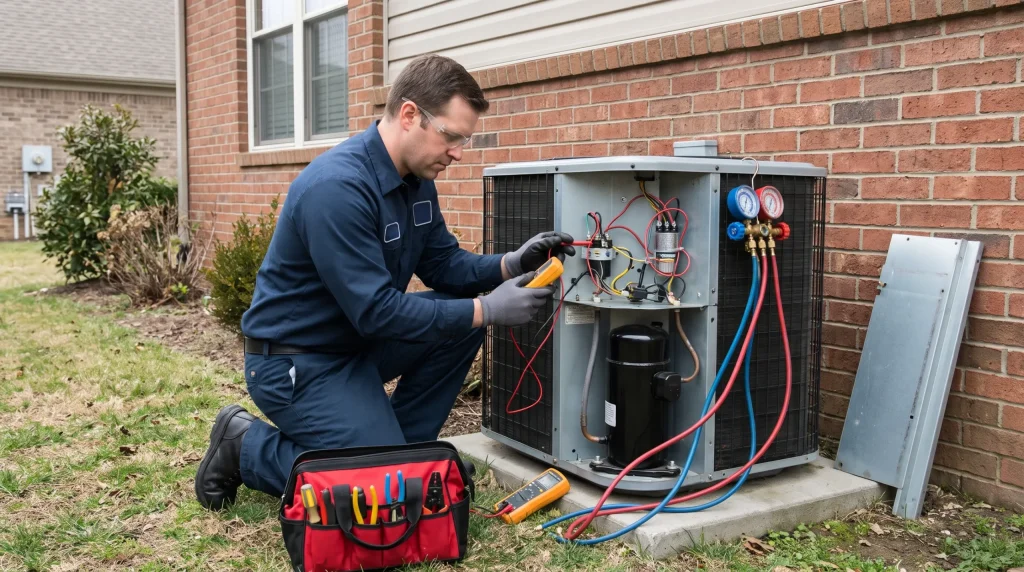
AC compressor testing and replacement in Bedford and DFW
AC compressor replacement in DFW typically costs $1,800 to $4,000 out of warranty, and less if the part is covered. Asking these six questions before you pay helps you avoid replacing a compressor that was never bad, or repairing a system that should be replaced.
AC Repair DFW has served Bedford, Euless, Hurst, Colleyville, Keller, and the surrounding DFW area for more than 30 years. Our licensed technicians test before they replace, check your warranty, and give you side-by-side prices for repair and replacement before any work begins.
Told your compressor is dead? Get a second opinion or call (817) 285-8000 for same-day service.