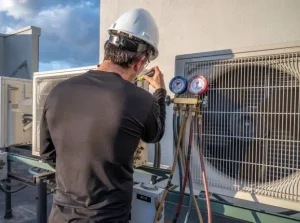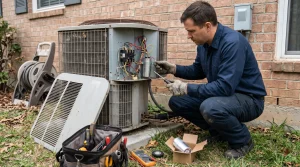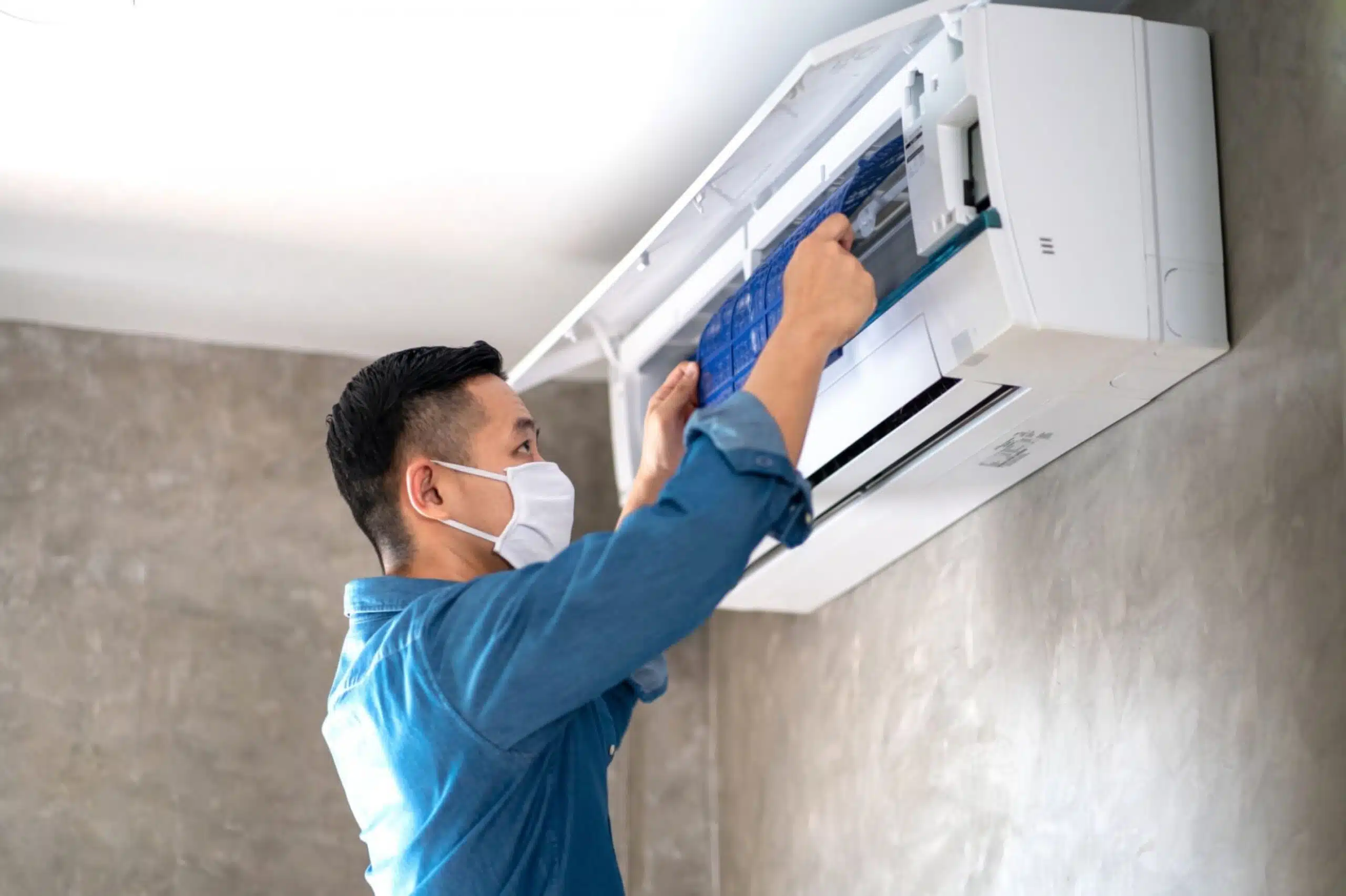
Quick answer: Most AC repairs in Dallas-Fort Worth cost between $150 and $650. Small electrical fixes like a capacitor or contactor usually run $150 to $400. Mid-range repairs such as a fan motor, refrigerant leak, or control board run about $400 to $1,500. Major repairs like an evaporator coil or compressor can cost $1,500 to $4,000 or more. Your final price depends on the part, your refrigerant type, your warranty, and whether you need same-day or after-hours service.
Key takeaways
- A diagnostic visit in DFW typically costs $75 to $150, and many companies waive or credit it when you approve the repair.
- Capacitors and contactors are the most common summer failures in North Texas, and they are also among the cheapest fixes.
- Refrigerant leak repairs cost more on older R-22 systems because R-22 is no longer produced, so the supply keeps shrinking.
- Compressor and coil failures are where the repair-or-replace decision matters most. Check your warranty before you pay.
- Always get the price in writing before work starts, and confirm your technician works for a state-licensed contractor.
- Repairs that are not safe to DIY include anything involving capacitors, refrigerant, or high-voltage wiring.
AC Repair Prices in DFW at a Glance
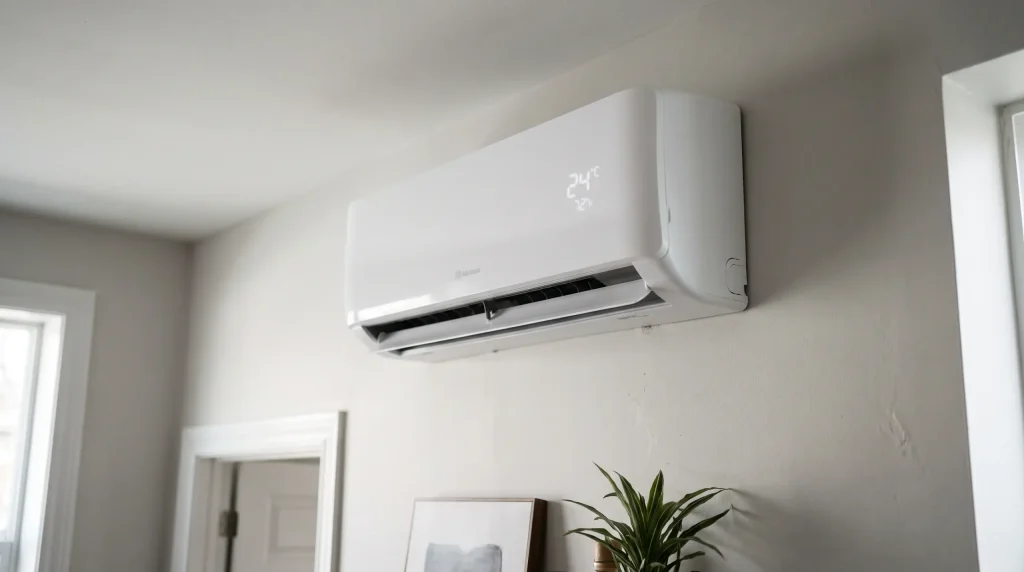
How much common AC repairs cost in Dallas-Fort Worth in 2026
These are typical installed prices for a single residential split system in the DFW area, including parts and labor. They are listed in the order we see them most often in the field.
# | Repair | Typical DFW cost (parts + labor) | Repair size |
1 | Capacitor replacement | $150 to $400 | Minor |
2 | Contactor replacement | $150 to $350 | Minor |
3 | Clogged condensate drain or float switch | $100 to $350 | Minor |
4 | Refrigerant leak repair and recharge | $300 to $1,600 | Mid-range |
5 | Condenser (outdoor) fan motor | $350 to $900 | Mid-range |
6 | Blower (indoor) motor | $450 to $1,500 | Mid-range |
7 | Thermostat repair or replacement | $150 to $500 | Minor |
8 | Breaker, fuse, disconnect, or wiring repair | $100 to $450 | Minor |
9 | Frozen or dirty evaporator coil service | $150 to $500 | Minor |
10 | Control board replacement | $350 to $900 | Mid-range |
11 | Evaporator coil replacement | $1,200 to $3,000 | Major |
12 | Compressor replacement | $1,800 to $4,000 | Major |
Most visits also include a diagnostic or service call fee of $75 to $150. Expect to pay more for after-hours calls, R-22 systems, attic air handlers, and high-efficiency variable-speed equipment.
1. Capacitor Replacement: $150 to $400
Why a failed AC capacitor is the most common summer repair in DFW
A bad capacitor is the cheapest major-sounding repair you can get, and it is one of our most common calls from June through September. The capacitor gives the compressor and outdoor fan the jolt they need to start. Weeks of 100-degree afternoons wear it out.
Symptoms: The outdoor unit hums but the fan does not spin, the system clicks on and off, or the air conditioner is blowing warm air while the indoor fan keeps running.
Likely cause: A weak or failed run capacitor, often bulging or leaking on top. If you want the background, here is what a capacitor does in your system.
The fix: A technician tests the capacitor with a meter, confirms the reading is out of spec, and swaps in a matching part. Most replacements take under an hour.
What it costs: $150 to $400. Dual-run capacitors and hard-start kits sit at the higher end.
Call a pro if: You see a swollen capacitor or hear humming. Capacitors hold a dangerous charge even with the power off, so this is not a DIY job. For the full breakdown, read How Much Does It Cost to Replace an AC Capacitor? 5 Signs It’s the Capacitor, Not the Compressor.
2. Contactor Replacement: $150 to $350
How to tell if a burned AC contactor is why your unit won’t start
A contactor is an electrical switch that turns the outdoor unit on when the thermostat calls for cooling. When its contacts pit or burn, the unit either will not start or will not shut off.
Symptoms: A clicking noise from the HVAC system with no startup, or an outdoor unit that keeps running after you turn the thermostat off.
Likely cause: Burned or pitted contacts, ants nesting in the switch, or a failed coil.
The fix: Replace the contactor and check the wiring and capacitor at the same time, since they often fail together.
What it costs: $150 to $350.
Call a pro if: The outdoor unit runs nonstop. That can overheat the compressor and turn a small bill into a big one.
3. Clogged Condensate Drain or Float Switch: $100 to $350
Why a clogged AC drain line shuts your system off
In humid North Texas summers, your AC pulls gallons of water out of the air every day. When the drain line clogs with algae, a safety float switch shuts the system down to protect your ceiling.
Symptoms: Water in the drain pan, a wet ceiling spot under the attic unit, or an AC unit leaking water inside the house. Sometimes the only sign is a system that stopped cooling for no clear reason.
Likely cause: Algae and sludge in the drain line, or a stuck float switch.
The fix: Clear the line with a wet vacuum or nitrogen, flush it, treat it to slow regrowth, and reset or replace the float switch.
What it costs: $100 to $350. Ceiling damage is not included, which is why catching it early matters.
Call a pro if: Water has reached drywall or the pan under an attic unit is full.
4. Refrigerant Leak Repair and Recharge: $300 to $1,600
How refrigerant type and leak location change your AC leak repair cost
Refrigerant does not get used up. If your system is low, it has a leak, and adding refrigerant without fixing the leak is paying twice.
Symptoms: Weak cooling, ice on the refrigerant lines, hissing near the unit, or bills creeping up. Learn the signs your AC is low on refrigerant.
Likely cause: A leak at a fitting, a Schrader valve, or a corroded coil.
The fix: Find the leak with an electronic detector or dye, repair or replace the leaking part, pull a vacuum, and recharge to the factory specification.
What it costs: $300 to $1,600 on most R-410A systems. Older R-22 systems cost more, because R-22 production ended in 2020 and remaining supply is recycled stock.
Call a pro if: You see ice or hear hissing. Handling refrigerant legally requires EPA certification. See How Much Does an AC Refrigerant Leak Repair Cost? 7 Factors That Change the Price for the full breakdown.
5. Condenser Fan Motor: $350 to $900
Why your outdoor AC fan stopped spinning and what it costs to fix
The outdoor fan pushes heat out of your home. When it stops, the compressor overheats within minutes and shuts off on its safety limit.
Symptoms: The outdoor fan blades sit still while the compressor hums, or the fan spins slowly. Our guide to an AC fan not working walks through the checks.
Likely cause: A worn motor bearing, a burned winding, or a failed capacitor that looks like a motor problem.
The fix: Test the capacitor first. If the motor is bad, replace it with a matched motor and new fan blade if needed.
What it costs: $350 to $900.
Call a pro if: The fan does not spin when the unit is running. Shut the system off to protect the compressor.
6. Blower Motor: $450 to $1,500
How much it costs to fix an indoor AC blower motor
The blower motor moves cool air through your ducts. When it fails, the outdoor unit may still run, but no air comes out of the vents.
Symptoms: Little or no airflow at the registers, a burning smell, or a loud hum from the air handler.
Likely cause: A failed motor, a bad blower capacitor, or a failed control module on variable-speed (ECM) motors.
The fix: Replace the capacitor if that is the cause. Otherwise, replace the motor or its module. ECM motors cost more but run quieter and more efficiently.
What it costs: $450 to $800 for a standard PSC motor. $900 to $1,500 for an ECM motor or module.
Call a pro if: You smell burning. Shut the system off at the thermostat and schedule HVAC repair.
7. Thermostat Repair or Replacement: $150 to $500
How to fix an AC thermostat that won’t turn on the cooling
Check the thermostat before you assume the AC is broken. A surprising number of no-cooling calls turn out to be a dead battery, a tripped setting, or a loose wire.
Symptoms: A blank screen, a system that ignores the set temperature, or cooling that starts and stops at random. Our guide to an AC thermostat not working covers the quick checks.
Likely cause: Dead batteries, a bad C-wire connection, a failed thermostat, or a thermostat mounted where sunlight hits it.
The fix: Replace batteries and confirm settings first. If the thermostat is bad, replace it and recalibrate.
What it costs: $150 to $300 for a standard model installed. $250 to $500 for a smart thermostat installed with a new C-wire.
Call a pro if: New batteries and correct settings do not fix it.
8. Breaker, Fuse, Disconnect, or Wiring Repair: $100 to $450
Why your AC keeps tripping the breaker and what the repair costs
A breaker that trips once on a 105-degree day may be a fluke. A breaker that trips again is your system telling you something is wrong.
Symptoms: The outdoor unit is completely dead, the breaker trips repeatedly, or you smell hot plastic near the disconnect box.
Likely cause: Blown fuses in the disconnect, loose or corroded wiring, or damage after a storm. North Texas storms make power surges a common cause of HVAC issues.
The fix: Replace fuses or the disconnect, tighten or replace damaged wiring, and find the root cause of the overload.
What it costs: $100 to $450.
Call a pro if: The breaker trips more than once. Do not keep resetting it, because repeated tripping can point to a failing compressor.
9. Frozen or Dirty Evaporator Coil Service: $150 to $500
How to fix an AC that keeps freezing up in Texas heat
A frozen coil sounds backward in July, but it happens all the time in DFW. Ice forms when airflow drops or refrigerant runs low, and the system stops cooling until it thaws.
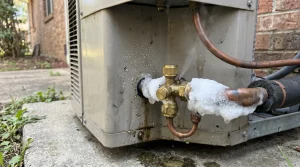
Symptoms: Ice on the indoor coil or the copper line outside, weak airflow, or water pooling as the ice melts. Here is why an AC freezes up in 100-degree Texas heat.
Likely cause: A clogged filter, a dirty coil, a weak blower, or low refrigerant. Learn the dirty evaporator coil symptoms to watch for.
The fix: Turn the system off to thaw, then clean the coil, replace the filter, and check airflow and refrigerant charge.
What it costs: $150 to $500 for thawing, coil cleaning, and diagnosis. A refrigerant leak found during the visit is priced separately.
Call a pro if: The coil refreezes after you change the filter.
10. Control Board Replacement: $350 to $900
Why a failed control board stops your AC from starting
The control board is the brain of your air handler or furnace. It tells the blower when to run and passes the cooling call to the outdoor unit.
Symptoms: No response at all, blinking error codes, or a blower that runs nonstop.
Likely cause: Power surges, age, or moisture from a clogged drain.
The fix: Read the error codes, confirm the board is at fault, and install a matched or approved universal board.
What it costs: $350 to $900, depending on the brand and whether the board is variable-speed. The same board usually runs your furnace too, so a fix now protects your winter heating service.
Call a pro if: You see blinking codes. Write them down before you call, because they speed up diagnosis.
11. Evaporator Coil Replacement: $1,200 to $3,000
How much it costs to replace a leaking evaporator coil
Evaporator coils corrode over time and develop small leaks that cannot be repaired cost-effectively. Replacement is a major repair that deserves a second look at the system’s age.
Symptoms: A refrigerant leak that keeps coming back, plus weak cooling and rising bills.
Likely cause: Formicary corrosion, a common failure in copper coils.
The fix: Replace the coil, flush or replace the line set if needed, and recharge the system.
What it costs: $1,200 to $3,000. Coils under manufacturer warranty often cost far less, because you pay mainly labor and refrigerant.
Call a pro if: You have recharged twice in two seasons. Read whether to replace the evaporator coil or the whole unit before you decide.
12. Compressor Replacement: $1,800 to $4,000
When AC compressor replacement is worth the cost
The compressor is the most expensive part in your AC. Replacing it is often worth it on a newer system under warranty, and rarely worth it on an old one.
Symptoms: The outdoor unit runs but blows warm air, trips the breaker, or makes loud clanking. See the signs your AC compressor is not working.
Likely cause: Years of heat stress, low refrigerant, electrical damage, or a failed start component that mimics a dead compressor.
The fix: Confirm the diagnosis with electrical tests first. A bad capacitor or contactor can look like a failed compressor. If the compressor is bad, replace it, flush the system, and recharge.
What it costs: $1,800 to $4,000 out of warranty. With a parts warranty, expect roughly $900 to $2,000 for labor and refrigerant.
Call a pro if: You were told the compressor is dead without electrical testing. Get a second opinion first, and read How Much Does AC Compressor Replacement Cost? 6 Questions to Ask Before You Pay for It.
What Drives the Price of AC Repair in DFW
Why two AC repair quotes for the same problem can differ by hundreds of dollars
The part is only one piece of the bill. These seven factors explain most of the difference between a $200 visit and a $2,000 one.
- The diagnostic fee. Most DFW companies charge $75 to $150 to diagnose the problem. We waive our service call fee when you approve the repair, so ask any company you call whether they do the same.
- Time of day and urgency. Nights, weekends, and holidays usually add $100 to $300 or more. Before you pay the premium, check what counts as an HVAC emergency after hours.
- Refrigerant type. R-22 systems cost more to recharge because the refrigerant is no longer produced. Newer systems built for R-454B or R-32 use parts that can cost more while supply catches up.
- Warranty status. A part under manufacturer warranty can cut a major repair in half. You still pay labor and refrigerant, so have your model and serial number ready.
- Equipment location. Many DFW homes have the air handler in a hot attic. Attic work in summer takes longer and costs more than a closet or garage install.
- System type and efficiency. Variable-speed and high-efficiency systems use more expensive motors, boards, and compressors. They save on bills, but each part costs more to replace.
- Home versus business. Rooftop units and larger systems price differently. If you manage a property, ask about commercial HVAC service rather than residential rates.
The cheapest repair is the one you avoid. A spring tune-up catches weak capacitors, dirty coils, and clogged drains before the first 100-degree week. Our AC tune-up checklist shows what a good visit should include.
When to Repair and When to Replace Your AC
How to decide if an AC repair is worth the cost on an older system
Repair when the system is under 10 years old and the fix costs less than a third of a new system. Replace when it is over 12 to 15 years old and facing a major repair like a compressor or coil.
Two rules of thumb from the field help:
- The $5,000 rule. Multiply the repair cost by the system’s age in years. If the result is over $5,000, replacement usually makes more sense.
- The 50 percent rule. If the repair costs half or more of a new system, put that money toward replacement instead.
A new central AC system in DFW typically runs $7,000 to $15,000 or more, depending on size, efficiency, and ductwork. That is why a $3,000 compressor on a 14-year-old unit is rarely a good bet. Our full guide to repair vs. replace for your AC unit walks through more scenarios.
If replacement wins, ask about HVAC replacement options that match your home’s size and budget. Building or adding on? Proper HVAC installation and sizing matter as much as the equipment. Bedford homeowners on Oncor lines can also check its energy efficiency programs for incentives on qualifying high-efficiency systems.
Not sure the AC is the real problem? High bills and hot rooms can come from leaky ducts or a poorly insulated attic. An energy assessment checks your HVAC performance, and a structure energy review looks at insulation and air leaks in the house itself.
How to Avoid Overpaying for AC Repair in Bedford and DFW
Five ways to make sure your AC repair price is fair
The best protection against overpaying is a licensed contractor, a written quote, and a clear diagnosis.
- Verify the license. Texas requires AC contractors to hold a state license. You can look up any company with the Texas Department of Licensing and Regulation. Local reporting from NBC DFW has found unlicensed operators cited across the Dallas-Fort Worth area.
- Get the price in writing. Ask for the part, the labor, and the total before work starts.
- Ask what failed and why. A good technician shows you the reading or the damaged part.
- Question big-ticket diagnoses. If you hear “compressor” with no electrical testing, get a second opinion.
- Watch for storm chasers. After hail or wind storms, door-to-door crews appear fast. The Texas Attorney General’s Consumer Protection Division takes complaints about contractors who do not deliver.
DIY-Safe Checks vs. Repairs That Need a Pro
Which AC problems you can check yourself before paying for a repair
A few free checks can save you a service call. Anything involving electrical parts or refrigerant needs a licensed technician.
Task | DIY-safe? | Why |
Replace the air filter | Yes | A clogged filter causes freezing and weak airflow |
Check thermostat batteries and settings | Yes | A dead battery or wrong mode looks like a broken AC |
Reset a tripped breaker once | Yes | If it trips again, stop and call a pro |
Rinse leaves and dirt off the outdoor coil (power off) | Yes | Blocked coils raise pressure and bills |
Pour vinegar into the condensate drain access | Yes, if accessible | Slows algae growth between visits |
Replace a capacitor or contactor | No | Stored electrical charge can cause serious injury |
Add or recover refrigerant | No | Requires EPA certification and gauges |
Replace a fan motor, blower motor, or control board | No | High voltage and exact part matching |
Replace a coil or compressor | No | Brazing, vacuum, and recharge to factory spec |
Get an Upfront AC Repair Price in Bedford and DFW
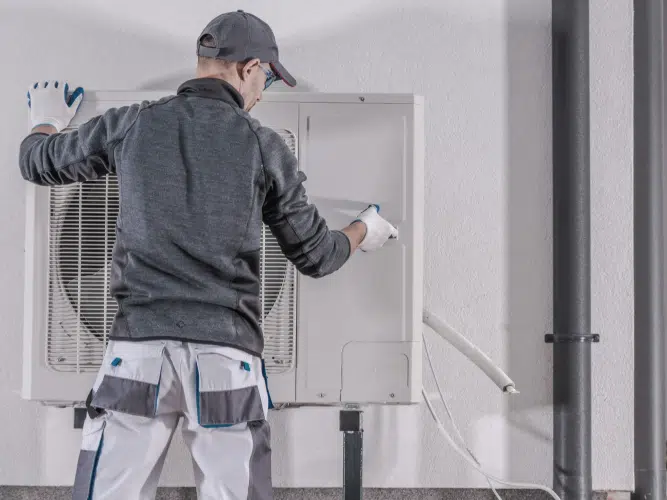
Same-day AC repair with the price confirmed before work starts
Most AC repairs in DFW cost $150 to $650, and knowing the typical range for your problem is the best way to avoid surprises. Small parts like capacitors and contactors are quick, affordable fixes. Big parts like coils and compressors call for a careful repair-or-replace decision.
AC Repair DFW has served Bedford, Euless, Hurst, Colleyville, Keller, and the surrounding DFW area for more than 30 years. Our licensed technicians diagnose the real problem, show you what failed, and give you the full price before any work begins.
Is your AC down or acting up? Request a free quote or call (817) 285-8000 for same-day service.