Your AC struggles in Texas heat because it was sized to cool your home about 20 degrees below the outdoor temperature, so once it climbs past 100, even a healthy system runs nonstop just to hold the setpoint. Anything that steals a little capacity (a clogged filter, dirty outdoor coils, low refrigerant, or a tired capacitor) pushes it over the edge, and the house starts drifting warm. Often the problem traces back to the original HVAC installation, since an undersized or poorly configured system can never quite keep up on the hottest days. The good news: most causes are cheap and fixable, and rarely need a full HVAC repair. Start with the filter and the outdoor unit, then work down the list below. If the system is icing over, blowing warm air, or the compressor won’t start, stop and call a pro before you damage it.
Key takeaways
-
- The single most common reason an AC can’t keep up in DFW summers is a dirty air filter or dirty outdoor condenser coil restricting airflow. Both are DIY fixes.
-
- An AC is designed to cool roughly 18 to 22 degrees below the outside temperature, so on a 105-degree day, holding 78 inside is normal, and holding 68 is not physically possible.
-
- Low refrigerant always means a leak. Adding refrigerant without finding the leak is a temporary and costly patch, not a repair.
-
- Never touch refrigerant lines, the capacitor, or the sealed compressor yourself. These carry a shock hazard and require an EPA-certified tech.
-
- If your system is freezing up, short cycling, or the breaker keeps tripping, turn it off and call a professional. Running it in that state causes far more expensive damage.
-
- Most “my AC isn’t cooling” calls in the DFW metro are solved the same day once the real cause is identified.
DIY-safe vs. call-a-pro: a quick guide
| Issue | Safe to DIY | Call a pro |
| Dirty air filter | Yes, replace or wash it yourself | Only if airflow stays weak after |
| Dirty condenser coils | Yes, rinse gently with a hose | If fins are bent or coil is greasy |
| Thermostat settings/batteries | Yes | Blank screen or no response with new batteries |
| Low refrigerant | No, never | Always, requires EPA certification |
| Failed capacitor | No, shock hazard | Always |
| Frozen coil (thawing it) | Yes, turn off and thaw | If it refreezes |
| Dirty evaporator coil | Light surface dust only | Full coil cleaning |
| Duct leaks | Minor accessible sealing | Duct test and full seal |
| Undersized/aging system | No | Always, needs a load calculation |
| Clogged condensate drain | Yes, vacuum the line | If it won’t clear or keeps tripping |
1. A clogged air filter is choking your airflow
Symptom: Weak airflow from the vents, longer run times, and a house that slowly loses ground on the hottest afternoons.
Most likely cause: A dirty filter. It is the number one reason we get “my AC can’t keep up” calls in July and August. A filter caked in dust restricts airflow across the evaporator coil, reducing cooling output and potentially freezing the coil.
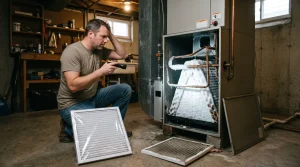
Fix steps: Turn the system off. Slide out the filter and hold it up to a light. If you can’t see light through it, replace it (or wash it, if it’s a reusable type). During peak Texas summer, check it monthly and swap it every 30 to 60 days. Confirm the arrow on the frame points toward the ductwork.
Call a pro if: You’ve replaced the filter and airflow is still weak, which points to a deeper duct or blower issue.
How to fix weak AC airflow from a dirty filter in summer
A fresh filter is the cheapest fix on this list and often the only one you need. If you’re unsure which type you have or how often to change it, see our guide on how to clean an HVAC filter and whether cheap vs. expensive air filters are worth it.
2. Your outdoor condenser coils are packed with dirt
Symptom: The system runs constantly, the outdoor unit feels like it’s blowing lukewarm (not hot) air off the top, and cooling is worst in the late afternoon.
Most likely cause: Dirty condenser coils. The outdoor unit rejects your home’s heat to the outside air. When grass clippings, cottonwood, and DFW dust clog the coil fins, that heat has nowhere to go, so the system loses capacity right when it needs it most.
Fix steps: Turn off power at the disconnect box by the unit. Clear leaves and debris from around it. Gently spray the coil fins from the inside out with a garden hose (never a pressure washer, which bends the fins). Keep at least two feet of clearance on all sides.
Call a pro if: The fins are heavily bent or the coil is greasy, which needs professional coil cleaning.
Why is my outdoor AC unit not cooling in Texas heat
A blocked condenser is one of the most common reasons an outdoor unit runs but the house stays warm. For seasonal upkeep, see our outdoor AC unit maintenance guide, and for a full walkthrough of this exact issue read our cluster on Why Is My Outdoor AC Unit Not Cooling? 6 Signs Your Condenser Coils Are Dirty.
3. Your thermostat is set or wired wrong
Symptom: The AC won’t turn on when it should, cycles at odd times, or the temperature reading looks off.
Most likely cause: A thermostat problem. Sometimes it’s as simple as the mode being on “fan” instead of “cool,” or a dead battery. Other times the thermostat is in direct sun or failing.
Fix steps: Set the mode to “cool” and the fan to “auto.” Drop the setpoint five degrees below room temperature and listen for the outdoor unit to kick on within a minute or two. Replace the batteries. Make sure no lamp or sunlight is hitting the thermostat and giving it a false reading.
Call a pro if: The screen is blank with fresh batteries, or the unit still won’t respond, which points to wiring or a bad thermostat.
How to fix an AC thermostat not cooling the house?
Small settings mistakes cause a surprising number of “no cooling” calls. Our guide on what to do when your AC thermostat isn’t working covers this, and the best AC settings for summer help your system keep up without overworking.
4. Low refrigerant from a leak
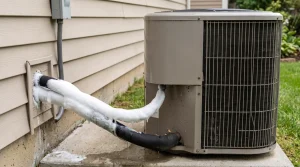
Symptom: The AC runs all day, air from the vents is only mildly cool or warm, and you may see ice on the copper line at the outdoor unit.
Most likely cause: Low refrigerant. Your system does not “use up” refrigerant, so if it’s low, there is a leak. Low charge means the system can’t absorb heat properly, so it runs endlessly and still can’t cool.
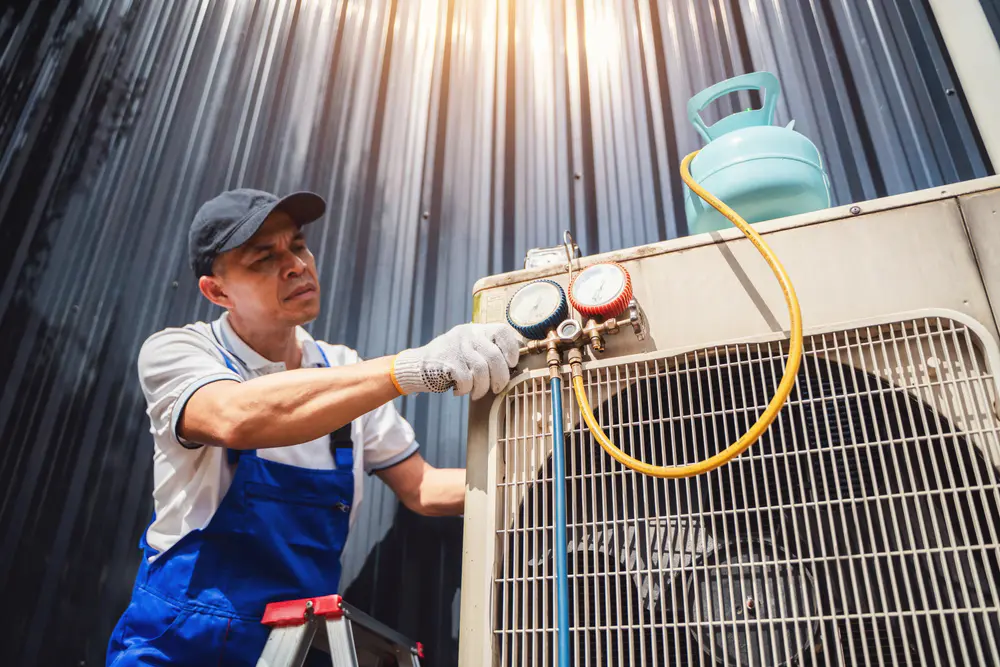
Fix steps: This is not a DIY fix. Refrigerant handling is regulated and requires EPA certification and specialized gauges. Turn the system off to prevent compressor damage and schedule a technician to find the leak, repair it, and recharge to spec.
Call a pro if: Always, for anything refrigerant-related.
Why is my AC blowing warm air in the heat?
Warm air during a heatwave is a classic low-refrigerant sign. Read our deep dive on why your air conditioner is blowing warm air to tell it apart from an airflow problem.
5. A failing capacitor or hard-starting compressor
Symptom: You hear a hum or click from the outdoor unit but the fan doesn’t spin, or the system struggles to start on hot afternoons.
Most likely cause: A weak or failed run capacitor. Capacitors give the motors their starting jolt, and Texas heat is brutal on them. A failing one is one of the most common summer breakdown parts.
Fix steps: This is not a DIY fix. Capacitors store a dangerous electrical charge even with the power off. Shut the system down at the breaker and call a technician, who can test and replace the capacitor safely, usually in a single short visit.
Call a pro if: Always. Do not open the electrical panel on the outdoor unit yourself.
Why won’t my AC compressor or fan start in the heat
If the outdoor fan won’t turn or the compressor hums and quits, see what a capacitor does, our guide on an AC compressor not working, and troubleshooting for an AC fan not working.
6. The evaporator coil has frozen over
Symptom: No cold air at all, ice visible on the indoor unit or the refrigerant line, and water pooling when it thaws.
Most likely cause: A frozen evaporator coil, usually from restricted airflow (dirty filter or coil) or low refrigerant. Ironically, an iced-up coil can’t cool anything, so the house heats up fast.
Fix steps: Turn the AC off and set the fan to “on” to help the ice melt, which can take a few hours. Replace a dirty filter while you wait. Once fully thawed, restart in cool mode. If it freezes again, there’s an underlying cause to fix.
Call a pro if: It refreezes, or you suspect low refrigerant. Running a frozen system risks compressor damage.
Why does my AC keep freezing up in summer
Repeat freezing always has a root cause. Our cluster on Why Is My AC Freezing Up in Summer? 7 Causes of a Frozen Evaporator Coil walks through all seven, and our guide on dirty evaporator coil symptoms covers a common trigger.
7. A dirty evaporator coil indoors
Symptom: Reduced cooling that got gradually worse over a season or two, sometimes with a musty smell.
Most likely cause: A dirty indoor evaporator coil. Even with a good filter, a fine film builds up over years and insulates the coil so it can’t absorb heat well.
Fix steps: Light surface dust near an accessible coil can be gently vacuumed, but the coil sits inside sealed ductwork and safe, thorough cleaning is a professional job. Keeping up with filter changes is your best prevention.
Call a pro if: Cooling is noticeably down and the filter is clean, which usually means the coil needs a professional cleaning.
How to fix reduced cooling from a dirty evaporator coil
Coil buildup is a slow, sneaky capacity killer. Learn the symptoms of a dirty evaporator coil so you can catch it before it freezes the system.
8. Leaky ductwork or poor insulation
Symptom: Some rooms never get comfortable, the system runs constantly, and your energy bills spike in summer.
Most likely cause: Duct leaks or weak attic insulation. In DFW, ducts often run through attics that hit 130-plus degrees. Leaky ducts dump your cooled air into that oven, and thin insulation lets heat pour back into the house.
Fix steps: Seal visible duct joints you can safely reach with mastic or foil tape (never cloth “duct tape,” which fails in heat). Add weatherstripping to attic access. A full duct-seal and insulation upgrade is a pro job with a strong payback in Texas.
Call a pro if: Rooms stay uneven after simple sealing, which calls for a duct inspection and pressure test.
Why won’t my AC cool certain rooms in the summer
Uneven cooling often points to ducts, not the AC itself. If the whole house just can’t reach the setpoint, see our cluster on Why Won’t My AC Cool Below a Certain Temperature in 100-Degree Texas Heat? 6 Reasons.
9. The system is undersized, aging, or overwhelmed
Symptom: Everything is clean and serviced, yet on the very hottest days the AC simply can’t hold the setpoint.
Most likely cause: The system is undersized for the home, or it’s old enough that it has lost efficiency. A 15-plus-year-old unit in DFW may run fine in spring and fall but fall behind in a July heatwave.
Fix steps: There’s no DIY fix for capacity. Confirm the basics are all handled first (filter, coils, refrigerant). If the unit is old and struggling every summer, a professional load calculation will tell you whether it’s undersized.
Call a pro if: The system can’t keep up despite being clean and charged, or it’s aging and breaking down repeatedly.
How to know if your AC is too small or too old for Texas heat
Sizing and age are judgment calls best made with data. See what size AC unit you need and our honest breakdown of repair vs. replace for an AC unit.
10. A blocked condensate drain shut the system down
Symptom: The AC stops cooling suddenly, sometimes with water near the indoor unit, and some systems shut off entirely on a safety switch.
Most likely cause: A clogged condensate drain line. Your AC pulls humidity out of the air, and that water drains away. When the line clogs with algae, a float switch shuts the system off to prevent water damage.
Fix steps: Locate the drain line (a PVC pipe near the indoor unit) and clear the clog with a wet/dry vacuum at the outdoor end. Pouring a cup of distilled vinegar into the access port a few times each summer keeps algae down. Staying on top of this simple task also comes up in any routine energy assessment, since a backed-up drain forces the system to work harder and waste power.
Call a pro if: The line won’t clear, water keeps backing up, or the safety switch keeps tripping. If clogs and shutdowns keep recurring on an older unit, it may be a sign that HVAC replacement is worth pricing out rather than repeating repairs.
How to fix an AC that shut off from a clogged drain line

A tripped float switch is a common “AC just quit” call. For related water issues, see our guides on an AC unit leaking water inside the house and why your air conditioner is leaking water.
The bottom line for DFW homeowners
Most of the time, an AC that struggles in Texas heat is telling you something simple: change the filter, rinse the outdoor coil, and confirm the thermostat. Work down this list in order and you’ll solve a large share of “it can’t keep up” problems yourself. But anything involving refrigerant, the capacitor, or the compressor is a genuine safety and equipment risk, and running a frozen or failing system only makes the repair bigger.
If you’ve checked the basics and your home still isn’t cooling, AC Repair DFW can help. Book same-day AC repair or get a free quote and we’ll have a licensed technician diagnose it fast, before the next heatwave hits.