Don’t Let Humidity Win This Summer
Humidity in Bedford, TX, is not going away, and every summer puts North Texas HVAC systems through their hardest test. None of the seven problems covered in this guide is unavoidable. They are predictable, and when caught early, most cost a fraction of what they cost when ignored.High humidity in Bedford, TX, is not just uncomfortable. It is one of the biggest threats to your home’s HVAC system, and most homeowners never see the damage coming until it is too late.
Every summer, Bedford and the rest of the DFW Metroplex get hit with humidity levels that regularly climb past 70% and sometimes push closer to 80% during the worst stretches of the season. Your air conditioner is not just cooling your home during those months. It is working double duty to remove moisture from the air at the same time. That extra stress adds up fast.
Here is what most homeowners in Bedford, TX do not know: high humidity is one of the top causes of HVAC breakdowns during the summer, often leading to costly HVAC repair calls at the worst possible time. It does not cause problems overnight. It builds slowly over weeks and months, quietly wearing down your system until something finally gives out, usually on the hottest day of the year.
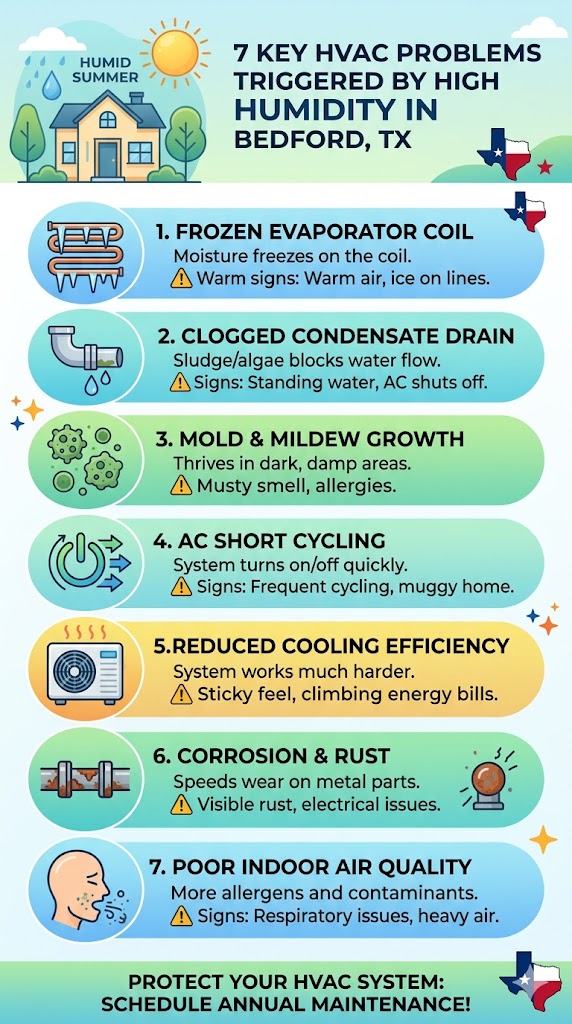
Frozen Evaporator Coils
What Is Actually Happening
A frozen evaporator coil is one of the most misunderstood HVAC problems in North Texas. It sounds impossible during a Bedford summer, but high humidity is actually one of the leading causes of this issue.
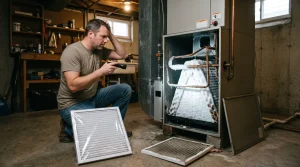
The evaporator coil sits inside your air handler and is responsible for absorbing heat from the indoor air. When outdoor and indoor humidity levels are high, excess moisture from the air collects on the coil surface faster than it can drain away. That moisture then freezes when the refrigerant inside the coil drops to low temperatures, especially if there is also a problem with restricted airflow.
The result is a block of ice forming on a critical part of your HVAC system in the middle of summer.
Warning Signs To Watch For
- Warm or room-temperature air is blowing from your vents even though the system is running
- Visible frost or ice on the copper refrigerant lines near your indoor air handler
- Water dripping or pooling on the floor around your indoor unit as the ice melts
- Your AC is running nonstop without ever reaching the temperature set on your thermostat
What To Check First
Take a look at the copper refrigerant lines that come out of your indoor unit. If you see frost or ice buildup anywhere on those lines, turn the system completely off and switch the fan setting on your thermostat to “ON” instead of “AUTO.” This allows the fan to run and circulate warm air over the coil to help it thaw out naturally. Never try to chip or scrape ice off the coil. Doing so can puncture the coil and turn a fixable problem into a very expensive one.
Also, check your air filter. Pull it out and hold it up to a light source. If you can barely see light through it, that filter is overdue for a replacement. A clogged filter is one of the most common airflow problems that leads to a frozen coil.
How To Prevent This Problem
- Replace the air filter every one to three months, more often if you have pets or allergies
- Make sure all supply and return vents in the home are open and not blocked by furniture, rugs, or curtains
- Schedule a professional HVAC tune-up every spring before the heavy humidity season starts in Bedford
- Keep the area around your indoor air handler clear so air can circulate properly
When To Call a Professional
If the coil keeps freezing after you have replaced the filter and confirmed good airflow throughout the home, the root cause is likely low refrigerant, a failing blower motor, or a coil that is coated in dust and grime and needs professional cleaning. These are not DIY fixes. A licensed HVAC technician can diagnose the exact cause and handle it safely.
For homeowners who want to stay ahead of bigger seasonal threats, check out How to Avoid HVAC Issues During Severe Weather for more tips on protecting your system year-round.
Clogged Condensate Drain Line
What Is Actually Happening
As your air conditioner cools your home, it pulls moisture out of the air. That moisture drips off the evaporator coil, collects in a drain pan underneath it, and flows out through a small pipe called the condensate drain line. During a humid Bedford summer, your AC can pull more than a gallon of water per hour out of the air inside your home.
That drain line works hard during humid conditions. When it gets clogged with algae, mold, or sludge buildup (which thrives in warm, wet environments), water has no way to escape. It backs up into the drain pan, overflows, and can cause significant water damage to ceilings, walls, and flooring.
Warning Signs To Watch For
- Standing water or moisture around the base of your indoor air handler
- Your AC randomly shuts itself off (most modern systems have a float switch that cuts power when water backs up in the drain pan)
- A musty or damp smell coming from your vents shortly after the system kicks on
- Water stains forming on the ceiling or drywall near the location of your indoor unit
What To Check First
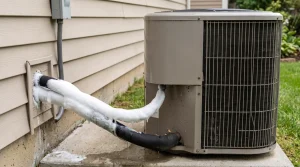
Find your condensate drain line. It is typically a white PVC pipe that exits through a wall or drains to the outside of your home near the outdoor condenser unit. During normal operation on a warm, humid day, you should see a slow and steady drip of water coming out of that pipe. If the system is running hard and no water is dripping out, there is a good chance the line is clogged or partially blocked.
How To Prevent This Problem
- Pour about one-quarter cup of plain white vinegar into the condensate drain access port every one to two months during peak season. This kills the algae and mold that cause clogs before they have a chance to build up
- Keep the drain pan clean and check it periodically for standing water or slime buildup
- Ask your HVAC technician to flush and inspect the condensate drain line as part of every annual maintenance visit
When To Call a Professional
Shallow clogs close to the drain access point can sometimes be cleared at home using a wet/dry vacuum. However, clogs deeper in the line or ones caused by a cracked or disconnected pipe section require professional equipment to fix properly.
If you live in North Texas, storm season can make drain issues even worse, so be sure to read Can Severe Storms Cause Hidden HVAC Issues to know what to watch for after bad weather hits.
Mold and Mildew Growth Inside the HVAC System
What Is Actually Happening
Think about what your HVAC system looks like on the inside during a humid Texas summer: dark, cool in some areas, warm in others, and consistently damp. That is the perfect environment for mold and mildew to grow.
Mold commonly takes hold on the evaporator coil, inside the drain pan, and throughout the ductwork. Once it spreads, your HVAC system becomes a distribution system for mold spores, pushing them through every vent in your home every time the system runs.
Warning Signs To Watch For
- A musty, earthy, or stale smell that appears right when the AC turns on and fades after a few minutes
- Household members experiencing increased allergy symptoms, coughing, sneezing, or eye irritation that seem to improve when they leave the house
- Dark or fuzzy spots are visible near or around your supply vents
- Worsening symptoms for anyone in the home who has asthma
What To Check First
Use a flashlight and look inside your supply vents. Check for any dark, fuzzy, or discolored buildup near the vent opening. Also, inspect the exterior cabinet of your indoor air handler for any signs of mold on the outside surface, which can indicate heavier growth on the inside components.
How To Prevent This Problem
- Keep indoor humidity levels between 30% and 50% at all times using your AC system and a dehumidifier if needed
- Use air filters rated at MERV 8 or higher to capture mold spores before they can settle and grow inside the system
- Keep the condensate drain line clear so moisture does not sit stagnant inside the drain pan
- Have your evaporator coil professionally cleaned on a regular schedule
When To Call a Professional
Mold inside ductwork or on HVAC components is not a problem to handle without professional help. Improper cleaning can spread spores throughout the home and make air quality significantly worse. A certified HVAC technician can treat the coil with an antimicrobial solution and refer you to a duct cleaning specialist if the contamination has spread further into the system.
Mold growth is not always caused by humidity alone, so it is also worth reading Are Power Surges Responsible for HVAC Issues to understand how electrical problems can contribute to moisture and air quality issues inside your system.
AC Short Cycling
What Is Actually Happening
Short cycling is when your air conditioner turns on, runs for just a few minutes, shuts off, and then starts again in a quick and repetitive loop. It is one of the most damaging operating patterns an AC system can fall into because it puts enormous stress on the compressor, which is the most expensive component in the entire system.
High humidity throws off the pressure balance inside the system and can trigger short cycling on its own. The problem is made even worse when the AC unit was never properly sized for the home to begin with. An oversized unit will cool the air temperature quickly without running long enough to pull significant moisture out, leaving the home feeling cold but still damp and clammy.
Warning Signs To Watch For
- The AC turns on and off every five to ten minutes instead of running a full and steady cycle
- The home reaches the temperature set on the thermostat, but still feels muggy and uncomfortable
- Energy bills are climbing higher than expected without any major change in usage habits
- The outdoor unit cycles on and off frequently throughout the day
What To Check First
Pay attention to how long your system runs before shutting off. A healthy cooling cycle in Bedford’s climate typically runs somewhere between 15 and 20 minutes during moderate conditions. Consistent cycles shorter than that are a red flag worth noting before calling a technician.
How To Prevent This Problem
- Always work with a licensed HVAC contractor who performs a Manual J load calculation before recommending a system size. This calculation accounts for your home’s square footage, insulation, ceiling height, window placement, and local climate
- Have your refrigerant levels checked annually, since low refrigerant can also trigger short cycling
- Keep air filters clean to ensure proper airflow throughout the system at all times
When To Call a Professional
Short cycling causes compressor wear that compounds over time. The longer it continues, the closer the system gets to full compressor failure. A technician will inspect the refrigerant charge, capacitor, contactor, and thermostat calibration to identify what is driving the problem.
Reduced Cooling Efficiency and Climbing Energy Bills
What Is Actually Happening
High humidity makes your air conditioner work significantly harder than it was designed to work on dry days. Cooling the air temperature is only half the job. Removing excess moisture from that air is the other half, and during a Bedford summer, that second job becomes overwhelming for a system that is not properly maintained or sized.
When the system is overworked, it runs longer cycles, consumes more electricity, and still struggles to keep your home comfortable. Efficiency drops, and your monthly energy bill reflects it.
Warning Signs To Watch For
- The home feels sticky, muggy, or uncomfortable even with the AC running steadily
- Energy bills that are noticeably higher compared to the same months in prior years
- The thermostat is showing that the home is consistently two to four degrees warmer than the target temperature
- The AC running almost continuously throughout the day without cycling off
What To Check First
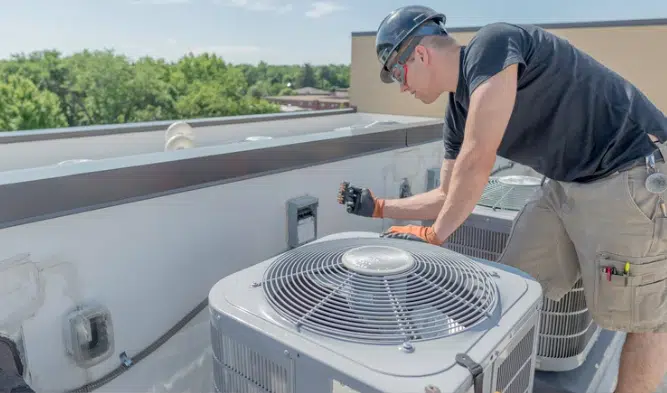
Pull up your last two or three energy bills and compare them to the same billing period from the previous year. A meaningful increase without a change in usage habits often points to efficiency loss inside the HVAC system. Then go outside and look at your outdoor condenser unit. Check whether the coil fins on the sides of the unit are clogged with dirt, grass clippings, or debris. Blocked fins restrict airflow through the outdoor coil and are one of the most common causes of efficiency loss in North Texas homes.
How To Prevent This Problem
- Keep at least two feet of clearance around all sides of the outdoor condenser unit
- Rinse the outside of the condenser unit gently with a garden hose in the spring to clear away built-up debris before the cooling season starts
- Schedule annual HVAC maintenance that includes coil cleaning, refrigerant charge verification, and blower motor inspection
When To Call a Professional
In most cases, a properly performed tune-up restores enough efficiency that homeowners recoup the cost in energy savings within the first month or two of the cooling season.
Corrosion and Rust on HVAC Components
What Is Actually Happening
Metal and persistent moisture are a bad combination. In Bedford’s humid summers, the ongoing exposure to moisture accelerates rust and corrosion on the metal components inside your HVAC system. This includes electrical connections and wiring, the heat exchanger, the condensate drain pan, and the outer cabinet of the outdoor unit.
This type of damage is slow and easy to overlook, but it shortens the lifespan of the entire system and creates safety risks when it reaches electrical components.
Warning Signs To Watch For
- Visible rust on the outer cabinet or coil fins of the outdoor condenser unit
- Unexplained electrical issues, such as tripped breakers or the system failing to start
- The system is aging faster than the expected 15 to 20-year lifespan for properly maintained equipment
- Rust-colored water stains around the indoor air handler or in the condensate drain pan
What To Check First
Walk outside and take a close look at the outdoor unit. Surface rust on the outer cabinet panels is cosmetic and not immediately dangerous. However, rust on the refrigerant lines, copper connections, or coil fins is a more serious finding that warrants a professional inspection sooner rather than later.
How To Prevent This Problem
- Schedule annual inspections so a technician can catch early-stage corrosion before it reaches critical components
- Ask about coil coating treatments that create a protective barrier against moisture damage, particularly on the evaporator coil
- Address any drainage issues immediately, so water never sits stagnant inside the drain pan for extended periods
When To Call a Professional
Corrosion that is caught early can often be treated and managed. Corrosion that has reached the electrical contactor, capacitor, or heat exchanger typically requires part replacement. Corrosion left untreated eventually leads to complete system failure. The cost of annual inspections is significantly lower than the cost of replacing a system years ahead of schedule.
Poor Indoor Air Quality Throughout the Home
What Is Actually Happening
High humidity does not just wear down the mechanical parts of your HVAC system. It changes the quality of the air your family breathes inside the home every single day.
Dust mites reproduce rapidly in environments where indoor humidity stays above 50%. Mold spores multiply and circulate through the duct system. Certain household building materials and furnishings release more chemical vapors in humid conditions. An HVAC system that is struggling with excess moisture often makes all of these problems worse by recirculating contaminated air throughout the home rather than filtering and refreshing it properly.
Warning Signs To Watch For
- Allergy symptoms, nasal congestion, coughing, or asthma flare-ups that happen most often at home
- Dust is accumulating on surfaces faster than usual
- A general feeling of heavy, stale, or stuffy air indoors, even with the AC running
- Condensation forms on windows, mirrors, or other cold surfaces inside the home
What To Check First
Pick up an indoor hygrometer from any hardware or home improvement store in the Bedford area. Check indoor humidity readings at different times of day across several days. If readings consistently sit above 55%, the HVAC system needs additional support in managing moisture before the air quality problem gets worse.
How To Prevent This Problem
- Keep windows and exterior doors closed during peak humidity days in Bedford, which typically run from late May through early September
- Run bathroom exhaust fans during and after showers, and use the kitchen exhaust fan while cooking to remove localized moisture at the source
- Upgrade to a higher-quality air filter rated MERV 8 or above to capture more airborne particles and allergens
- Consider a whole-home dehumidifier integrated directly into the HVAC system for continuous moisture management
When To Call a Professional
For homeowners dealing with persistent humidity problems, allergy concerns, or high cooling costs, this is one of the highest-return HVAC upgrades available. It reduces the load on the AC system, improves comfort year-round, and directly supports better indoor air quality for the entire household.
Quick Reference Guide: Humidity Warning Signs and First Steps
HVAC Problem | Key Warning Sign | First Step To Take |
Frozen Evaporator Coil | Warm air from vents, ice on lines | Turn off the AC, replace the air filter |
Clogged Condensate Drain | Water pooling, AC shutting off randomly | Check the drain line for flow |
Mold and Mildew Growth | Musty smell when the AC turns on | Inspect vents, call a professional |
AC Short Cycling | The system turns on and off every few minutes | Time your cooling cycles |
Reduced Efficiency | High bills, home stays warm and muggy | Schedule a tune-up |
Corrosion and Rust | Rust on the outdoor unit, electrical issues | Annual professional inspection |
Poor Indoor Air Quality | Allergy symptoms, stale air | Check indoor humidity with a meter |
Scheduling annual maintenance, replacing air filters regularly, and paying attention to early warning signs make all the difference. When something feels off, contact a licensed HVAC technician in Bedford, TX, sooner rather than later. A small repair in April is always cheaper than an emergency call in July, or worse, a full HVAC replacement that could have been avoided with routine care.
Bedford Homeowners Deserve Reliable HVAC Service
AC Repair DFW serves Bedford and the surrounding North Texas area with the hands-on experience that humidity-related HVAC problems demand. From frozen coils to full system diagnostics, the work gets done right the first time. Do not wait for a breakdown. Contact us today or give us a call and get your HVAC system ready before the Bedford summer heat takes over.