Many systems continue to run for years, gradually losing comfort, consistency, and reliability. Homeowners often notice longer run times, uneven temperatures, or more frequent service calls before a complete failure happens.
A professional check through HVAC services can clarify whether an older system still has dependable capacity or whether wear is starting to affect performance in ways that will keep returning. Reliability depends on condition, prior maintenance, home airflow, and the system’s handling of seasonal load. Precise evaluation helps homeowners plan repairs or replacement without last-minute pressure.
Signs an Older HVAC System Is Losing Reliability
Reliability often declines in ways that feel subtle at first. A system may still heat and cool, yet it may struggle to hold a set temperature, manage humidity, or operate without interruptions. Age-related wear can also increase sensitivity to outdoor temperature swings, especially during peak demand. Professional assessment focuses on measurable performance and operating behavior rather than assumptions.
Common reliability warning signs include:
- Longer run times to reach thermostat settings
- Frequent cycling on and off during mild weather
- Temperature swings between rooms
- Weak airflow from vents compared to past seasons
- Humidity that feels harder to manage during cooling
- Noises that are new or growing louder over time
- Odors during startup that keep returning
Many of these signals can connect to airflow restrictions, controls, or worn components, so diagnosis matters. A technician can explain whether targeted HVAC repair is likely to restore stable comfort or whether recurring decline suggests a replacement plan.
For problem patterns that more often point toward replacement, visit our blog, “Which HVAC Problems Mean Replacement Is the Better Option?”
What Aging Does to Efficiency, Comfort, and Seasonal Performance
Aging affects how a system handles heat load, how evenly it conditions air, and how efficiently it runs over time. Wear across motors, coils, and controls can reduce capacity, leading to longer cycles and more noticeable indoor swings. Seasonal stress matters, since extreme heat and cold can expose weaknesses that remain hidden during mild weather.
Aging-related performance changes often include:
- Slower recovery after thermostat changes
- Reduced cooling output during high outdoor temperatures
- Less consistent heating during cold mornings
- More noticeable airflow imbalance across rooms
- Higher likelihood of random shutdowns during peak load
Homeowners may start comparing repair frequency with long-term planning. Some begin looking for HVAC replacement near me when comfort becomes unpredictable during peak season. Replacement planning often includes performance goals and commissioning, especially when a professional discusses HVAC installation approaches that support stable results.
For a broader timing framework, check our article, “How Do You Know It’s Time for HVAC Replacement?”
HVAC Problems That Often Show Up as Systems Age
Aging equipment often develops a mix of minor issues and higher-impact failures. Some conditions are repairable, yet repeating issues can signal broader wear. A professional evaluates patterns over time, since a single symptom rarely tells the whole story.
Common HVAC Problems associated with aging systems include:
- Repeating refrigerant and coil concerns
- Blower and airflow issues that return across seasons
- Electrical control faults and sensor problems
- Drain and moisture management issues that recur
- Wear-driven noise changes during operation
A technician can determine whether the system can be restored to stable performance or whether a replacement plan better aligns with comfort and reliability needs.
For risks that increase when replacement is delayed, visit our blog, “What Risks Increase When HVAC Replacement Is Postponed?”
How Professionals Test an Older HVAC System for Real Reliability
Professional evaluation focuses on evidence from operating behavior and measured performance. The goal is to determine whether the system can handle peak load without frequent interruptions and whether major components exhibit wear that will likely require repeat service.
Performance testing and airflow review
Technicians evaluate supply and return airflow, temperature split, and how quickly the home reaches the set temperature. Airflow issues can mimic equipment decline, so delivery testing matters.
Component condition and trend review
Wear on motors, electrical controls, and coils often affects reliability. Professionals consider how often the same issues return and whether multiple parts are wearing at the same time.
Safety and control stability
Electrical integrity and control response influence safe operation. A technician checks connections, protective devices, and control behavior under normal and peak conditions.
Repair viability versus replacement planning
If the system can be restored reliably, repair may be recommended. If the repeat breakdown risk remains high, HVAC replacement planning may be the better long-term path.
A full evaluation helps homeowners avoid guesswork and choose a service direction based on system condition.
Replacement Planning Topics That Often Come Up for Older Systems
Replacement planning is not only about age. Homeowners and business owners often discuss comfort expectations, building needs, and reliability goals. A professional can explain options based on system design and usage patterns.
Comfort goals and home needs
A plan may focus on stronger humidity control, better room-to-room consistency, or quieter operation.
System category and building type
Some properties require residential HVAC replacement planning for comfort and scheduling needs. Others evaluate commercial HVAC replacement when uptime matters for tenants, employees, or customers.
Planning questions and budgeting concerns
Questions about HVAC replacement costs often arise early, but final totals depend on system sizing, duct conditions, and equipment selection. A professional can explain realistic options based on evaluation results.
Balancing repair work and long-term planning
When an older HVAC System remains stable, repairs may extend service life. When reliability becomes unpredictable, replacement planning may reduce disruption.
How Do You Know If an Older HVAC System Is Truly Reliable?
When evaluating an older HVAC system, reliability is best measured by comparing everyday homeowner experiences with what a professional technician confirms during testing. Comfort patterns, system behavior, and response under load all provide proper signals. The table below outlines common reliability indicators, what they often mean, and how they influence long-term performance decisions.
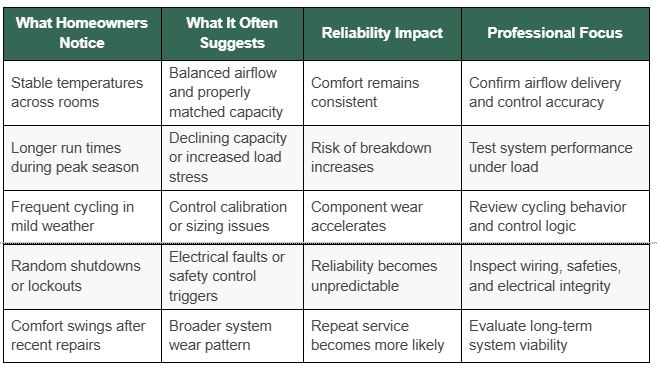
While symptoms can suggest underlying issues, diagnostic testing ultimately determines whether targeted repairs can restore reliable operation or whether replacement is the safer, more predictable option.
Next Steps for Confident Decisions About Aging Equipment
Aging systems may remain valid for a period, but reliability depends on actual condition, airflow delivery, and how the system handles seasonal load. Warning signs such as longer run times, frequent cycling, comfort swings, and recurring service calls often indicate a decline that may recur. Professional evaluation helps homeowners determine whether repairs can restore stable performance or whether replacement is a better fit.
AC Repair DFW helps homeowners in Bedford, TX, make informed HVAC decisions through detailed evaluations focused on safety, comfort, and preventive care. The team analyzes system operation, evaluates performance under regular use, and walks homeowners through realistic options based on the equipment’s actual condition.
Contact us today or give us a call to explore system reliability concerns and long-term planning options. A qualified professional can recommend the safest next step based on performance patterns and service history.
Frequently Asked Questions
Are older HVAC systems better?
No, older HVAC systems are generally less efficient and less reliable than modern systems. Advances in technology have improved energy efficiency, comfort control, and safety features in newer equipment. For current guidance on refrigerants and HVAC standards, refer to the Environmental Protection Agency.
At what age should you replace your HVAC system?
Most HVAC systems are considered for replacement between 15 and 20 years old. Replacement timing depends on system condition, repair frequency, and overall performance rather than age alone.
Is it safe to use an old AC unit?
Yes, an older AC unit can be safe to use if it has been properly maintained and operates normally. However, aging systems are more prone to breakdowns and may lack modern safety and efficiency standards.
What is the 3-minute rule for AC?
The 3-minute rule refers to waiting at least three minutes before restarting an air conditioner after it shuts off. This pause allows system pressures to stabilize and helps protect the compressor from damage.
Can an AC last 40 years?
No, most air conditioners do not last 40 years under normal operating conditions. Systems reaching that age typically operate with very low efficiency and increased risk of failure.
What is the maximum age of an AC unit?
The maximum practical age of an AC unit is usually around 20 to 25 years. Beyond that point, reliability and efficiency decline significantly.
How efficient is a 25-year-old air conditioner?
A 25-year-old air conditioner is significantly less efficient than modern systems. Older units often consume more energy while delivering less consistent cooling. For reliable energy-efficiency guidance and HVAC standards, review resources from the U.S. Department of Energy’s HVAC efficiency guide.
Can a 20-year-old AC unit be repaired?
Yes, a 20-year-old AC unit can sometimes be repaired if the issue is minor. However, repeated repairs or major component failures often make replacement the more practical option.
Should I replace the HVAC before it fails?
Yes, replacing an HVAC system before failure helps avoid emergency breakdowns and unexpected comfort loss. A planned replacement also enables better budgeting and system selection.
Do comfort swings always mean replacement is needed?
Not always, some comfort issues stem from airflow delivery or controls that can be corrected, so a professional diagnosis is essential.